
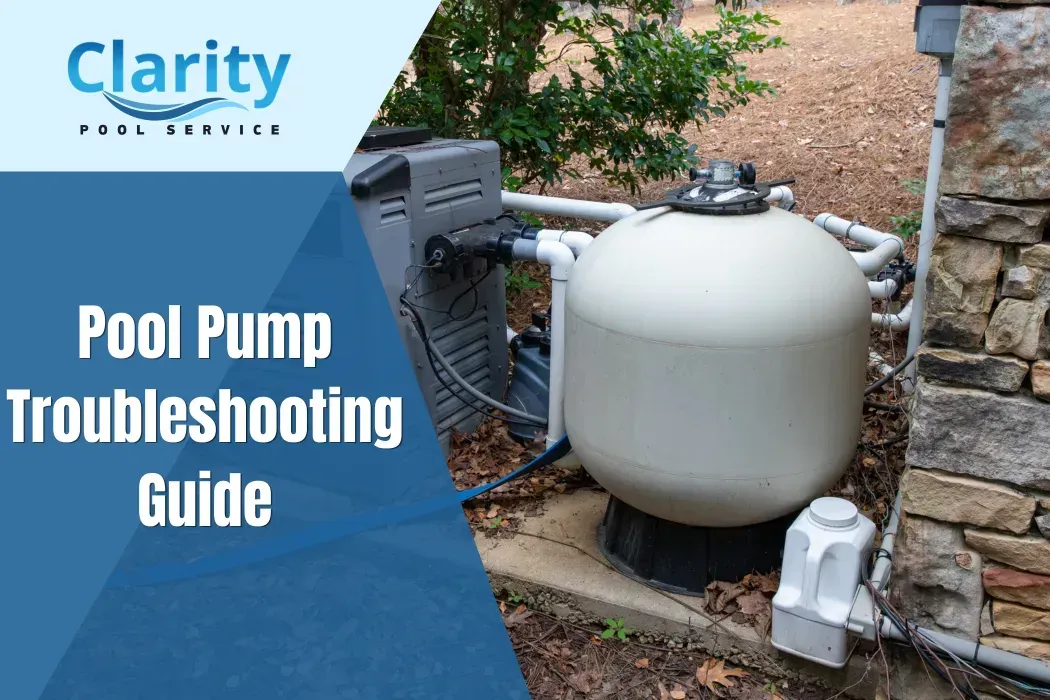
Pool Pump Troubleshooting Guide
Common Pool Pump Problems, What They Mean, and What to Check First
Your pool pump is the heart of the circulation system.
When it isn't operating correctly, homeowners may notice problems throughout the pool:
Weak return flow
Poor skimming
Air in the pump basket
Cloudy water
Reduced filtration
Salt-system flow warnings
Heater problems
Algae developing in poorly circulated areas
But a circulation problem doesn't automatically mean the pump itself has failed.
Sometimes the problem is much simpler:
A full basket.
Low water level.
A dirty filter.
A valve in the wrong position.
That's why good pump troubleshooting starts with the complete circulation system before assuming an expensive repair is necessary.
Quick Answer
If your pool pump isn't working normally, start by checking:
Pool water level
Skimmer baskets
Pump basket
Valve positions
Filter condition
Air inside the pump basket
Return flow
Pump error messages
If those basic conditions appear normal and the pump still has problems, professional diagnosis may be appropriate.
Stop troubleshooting and seek qualified help if you notice electrical problems, repeated breaker trips, burning smells, smoke, severe overheating, or another obvious safety concern.
Pool Pump Troubleshooting at a Glance
Symptom | First Things to Check |
Pump won't start | Power, schedule, error display |
Pump runs but no water moves | Water level, prime, valves, baskets |
Weak return flow | Baskets, filter, valves, circulation |
Air in pump basket | Water level, suction-side conditions |
Bubbles from returns | Air entering circulation system |
Pump repeatedly loses prime | Water level, suction side, pump condition |
Pump is noisy | Debris, vibration, mechanical condition |
Pump leaks | Seal area, fittings, plumbing |
Pump shuts off | Error code, overheating, electrical issue |
Energy use increases | Programming, speed, equipment condition |
This table provides starting points—not final diagnoses.
Problem 1: The Pool Pump Won't Turn On
If the pump won't start, don't immediately assume the motor has failed.
Start with the obvious questions:
Is the equipment receiving power?
Is the pump scheduled to be running?
Has an automation setting changed?
Is there an error message on the pump?
Has a breaker tripped?
Modern variable-speed pumps often display information that can help identify why the equipment isn't operating.
Take a photo of any error message before resetting the pump.
If the breaker repeatedly trips or there are signs of an electrical problem, don't continue resetting it.
Pool equipment combines electricity and water.
Electrical diagnosis should be handled by an appropriately qualified professional.
Problem 2: The Pump Runs but Isn't Moving Water
A pump motor can appear to be running while circulation is inadequate.
Check:
Water Level
If the water is too low, the skimmer may draw air instead of maintaining a steady water supply.
Valve Positions
Confirm that suction and return valves are positioned appropriately.
Baskets
A severely restricted skimmer or pump basket can reduce water flow.
Pump Basket
Look through the lid.
Is the pump basket housing filled with water, or is there a large amount of air?
If the pump cannot establish normal water flow, avoid allowing it to run dry for extended periods.
Problem 3: The Pump Won't Prime
Priming means establishing enough water inside the pump and suction plumbing for normal circulation to begin.
A pump struggling to prime may involve:
Low pool water
Air entering the suction side
Pump-lid sealing problem
Valve position
Blockage
Other plumbing or pump conditions
Repeatedly restarting the pump doesn't solve the reason it cannot maintain prime.
If the obvious conditions are correct and the problem continues, further diagnosis is appropriate.
Problem 4: There Is Air Inside the Pump Basket
A pump basket doesn't necessarily have to appear absolutely bubble-free under every operating condition.
But a significant increase in air compared with normal operation is useful diagnostic information.
You may also notice:
Bubbles from return jets
Irregular pump sound
Weak circulation
Repeated loss of prime
Possible causes may involve the suction side of the circulation system.
Start with:
Pool water level
Skimmer conditions
Pump-lid condition
Valve positions
If air persists, the system may need further evaluation.
Problem 5: Bubbles Are Coming From the Return Jets
Persistent bubbles from the return jets often mean air is traveling through the circulation system.
Look at the pump basket.
If significant air is visible there too, investigate how air may be entering the suction side.
Don't confuse occasional bubbles after equipment starts with persistent air that continues during normal operation.
The change from your pool's normal baseline is what matters.
Problem 6: Return Flow Is Weak
Weak return flow is one of the most commonly misdiagnosed pool problems.
Homeowners may immediately assume:
“My pump is going bad.”
But several conditions can reduce flow.
Check:
Skimmer baskets
Pump basket
Filter pressure
Filter condition
Valve positions
Water level
A dirty or heavily restricted filter can significantly affect circulation even when the pump itself is functioning normally.
Our How Often Should a Pool Filter Be Cleaned? guide covers filter diagnosis in greater detail.
Problem 7: Filter Pressure Is Higher Than Normal
Higher filter pressure can indicate increased resistance through the filtration system.
One common cause is a filter becoming loaded with contaminants.
Consider:
How long since the filter was serviced
Recent wind or debris
Water clarity
Return flow
Filter type
Don't diagnose the pump based solely on filter pressure.
The pump and filter operate as one circulation system.
Problem 8: Filter Pressure Is Lower Than Normal
Lower-than-normal pressure can also provide useful information.
It may indicate reduced water flow reaching the filter.
Possible factors can include:
Restricted suction
Full baskets
Air entering the system
Valve position
Pump performance
Again, the number itself isn't the diagnosis.
Compare pressure with your pool's normal baseline and evaluate the complete circulation path.
Problem 9: The Pump Is Making a New Noise
Pool pumps normally produce a consistent operating sound.
Pay attention to new:
Grinding
Screeching
Rattling
Humming
Excessive vibration
A new noise doesn't automatically mean the pump needs replacement.
Possible causes range from something vibrating against the equipment to internal mechanical wear.
If the sound persists or worsens, have it evaluated before complete failure occurs.
Problem 10: The Pump Is Leaking
Persistent pump leaks should be investigated.
Look for water around:
Pump lid
Plumbing connections
Pump housing
Connections between pump components
Some leaks may involve relatively simple seals or fittings.
Others require more significant repair.
A leaking pump isn't automatically a failed pump.
But allowing a persistent leak to continue indefinitely can create additional problems.
Start With the Simple Things
Before assuming you need a new pump, check:
Water level → Baskets → Valves → Filter → Air → Error messages
Those basic observations can eliminate several common causes of circulation trouble.
If everything appears normal and the problem continues, move from homeowner troubleshooting to professional diagnosis.
That distinction can prevent unnecessary parts replacement while also keeping homeowners from attempting repairs beyond their experience.
Problem 11: The Pump Shuts Off Unexpectedly
A pump that repeatedly shuts down outside its normal schedule deserves attention.
Possible signs include:
Pump stops after running for a short period
Pump unexpectedly restarts later
Error messages appear
Pump becomes unusually hot
Breaker trips
Start by checking the pump display or automation system for an error message.
Take a photo before resetting anything.
If the pump repeatedly trips a breaker, smells overheated, or shows other electrical warning signs, stop repeatedly restarting it and have the system evaluated by an appropriately qualified professional.
Problem 12: The Pump Runs, but the Pool Still Isn't Skimming Well
Poor surface skimming doesn't necessarily mean the pump needs more speed or longer run time.
Check:
Skimmer basket
Water level
Skimmer-door operation
Valve positions
Return flow
Filter condition
Pool circulation is a complete system.
Changing pump speed may help in some situations, but first determine whether something else is restricting or redirecting water flow.
Problem 13: The Pump Seems to Be Using Too Much Electricity
Variable-speed pumps can often be programmed to provide circulation using lower speeds for portions of the day.
If electricity use appears unusually high, review:
Pump speed
Daily run time
Equipment schedules
Spa operation
Water features
Heater requirements
Don't simply reduce the pump to the lowest possible speed.
Salt systems, heaters, cleaners, and other equipment may require minimum flow.
The goal is efficient circulation, not simply minimum pump operation.
Our How Long Should You Run Your Pool Pump? guide explains scheduling and variable-speed operation in greater detail.
Problem 14: The Salt System Shows a Flow Warning
A salt-system flow warning doesn't automatically mean the salt cell has failed.
Because the salt chlorine generator depends on adequate water flow, check:
Pump operation
Pump speed
Baskets
Filter condition
Valve positions
If circulation appears normal and the warning continues, the salt system itself may need further evaluation.
This is another example of why pool equipment shouldn't be diagnosed in isolation.
Problem 15: The Heater Won't Run
A heater problem can sometimes begin as a circulation problem.
Many pool heaters require adequate water flow before they will operate.
If the heater won't start, consider:
Is the pump running?
Is pump speed adequate?
Is circulation normal?
Is the filter restricted?
Is the heater displaying an error?
If normal flow conditions are present and the heater still doesn't operate, qualified heater diagnosis may be necessary.
Don't assume a heater error automatically means the heater needs replacement.
Pool Pump Problems: What Homeowners Can Check Safely
Homeowners can perform several useful observations without opening equipment or performing repairs.
Check the Pool
Water level
Skimmer conditions
Return flow
Check the Equipment
Skimmer baskets
Pump basket
Filter pressure
Visible leaks
Valve positions
Check the Controls
Pump schedule
Error messages
Automation status
Listen
Has the pump sound changed?
Is there unusual vibration?
These observations can provide valuable information without requiring you to disassemble the pump.
When to Stop Troubleshooting
Some pump problems should move beyond basic homeowner troubleshooting.
Stop and seek qualified help when you encounter:
Repeated breaker trips
Burning smell
Smoke
Electrical problems
Severe overheating
Significant equipment damage
Persistent failure to prime
Major leaks
Pump repeatedly shutting down
Internal mechanical problems
Don't open electrical components or attempt repairs beyond your training and experience.
Water and electricity require particular caution.
Does My Pool Pump Need Repair or Replacement?
A pump problem doesn't automatically mean you need a new pump.
Repair may make sense when:
The problem is isolated
The pump is otherwise reliable
Replacement parts are available
Overall condition is good
Repair cost is reasonable
Replacement may become more attractive when:
Major components are failing
Repairs are becoming frequent
Parts are difficult to obtain
Reliability has significantly declined
Repair cost approaches the value of replacement
Age matters.
But age alone isn't a diagnosis.
Our Pool Equipment Repair vs. Replacement guide provides a complete framework for making that decision.
Don't Replace a Pump Because of Weak Flow Alone
This deserves emphasis because weak circulation can originate in several places.
Before replacing the pump, evaluate:
Water level → Baskets → Filter → Valves → Air → Plumbing → Pump
If the filter is severely restricted, installing a new pump doesn't fix the filter.
If the pump is drawing air through the suction side, replacing an otherwise healthy pump may not fix the air leak.
Good troubleshooting isolates the actual problem.
Common Pool Pump Troubleshooting Mistakes
Repeatedly Restarting the Pump
If the pump keeps shutting down or losing prime, repeatedly restarting it doesn't identify the cause.
Find out why the problem keeps returning.
Changing Several Settings at Once
Changing:
Pump speeds
Schedules
Valves
Automation settings
at the same time makes troubleshooting much harder.
Record the original settings and make intentional changes.
Ignoring the Filter
A restricted filter can make a healthy pump appear weak.
Always consider filter condition when circulation declines.
Assuming Air Is Normal Because the Pump Still Runs
If the pump previously ran with little visible air and now contains a large air pocket, something changed.
Investigate the change.
Buying Parts Before Diagnosing the Problem
Replacing components based on symptoms can become expensive.
Diagnose first.
Buy parts second.
Frequently Asked Questions
Why is my pool pump running but not pumping water?
Possible causes include low water level, loss of prime, valve position, restricted suction, air entering the system, or another circulation problem.
Start with the simple conditions before assuming pump failure.
Why won't my pool pump prime?
Check water level, baskets, valve positions, pump-lid condition, and signs of suction-side air.
If the pump repeatedly fails to establish or maintain prime, further diagnosis may be necessary.
Why are there bubbles in my pool returns?
Persistent bubbles can indicate air entering the circulation system.
Look for significant air inside the pump basket and check basic suction-side conditions.
Why is my pool pump pressure high?
Technically, the pressure gauge is measuring pressure at the filter rather than “pump pressure.”
Higher-than-normal filter pressure may indicate increased resistance through the filtration system.
Filter condition is one of the first things to evaluate.
Why is my pool pump pressure low?
Lower-than-normal filter pressure may indicate reduced water flow.
Possible causes can involve baskets, suction restrictions, air, valves, or pump performance.
Compare the reading with your normal system baseline.
Why is my pool pump making a grinding noise?
A persistent new grinding or mechanical sound may indicate internal wear or another mechanical problem.
Don't assume the entire pump needs replacement, but have persistent unusual noises evaluated.
Why does my pool pump keep shutting off?
Possible causes range from programming and equipment errors to overheating or electrical problems.
Check for error messages.
Repeated breaker trips or electrical warning signs require qualified evaluation.
How do I know if my pool pump is bad?
Look at the complete pattern:
Does it maintain prime?
Is circulation normal?
Are there leaks?
Are there unusual noises?
Does it repeatedly shut down?
Are errors occurring?
Then eliminate simpler circulation problems before concluding the pump itself has failed.
A Simple Pool Pump Troubleshooting Order
When something doesn't seem right, use this sequence:
1. Check Water Level
Make sure the skimmer can receive adequate water.
2. Check Baskets
Clear skimmer and pump baskets.
3. Check Valves
Confirm normal positions.
4. Look at the Pump
Check for air, leaks, noises, and errors.
5. Check the Filter
Compare pressure and circulation with normal conditions.
6. Check Return Flow
Determine whether water movement has actually changed.
7. Document the Problem
Photograph errors and record what you're observing.
8. Escalate When Necessary
If the basic conditions are normal and the problem persists, move to professional diagnosis.
This order prevents a lot of unnecessary guessing.
Final Thoughts
When pool circulation changes, don't immediately blame the pump.
Start with the complete system.
Water level.
Baskets.
Valves.
Filter.
Air.
Pump.
A simple restriction can sometimes create symptoms that look like an expensive equipment failure.
At the same time, don't ignore persistent warning signs.
A pump that repeatedly loses prime, leaks, shuts down, makes unusual mechanical noises, or develops electrical problems deserves proper diagnosis.
The goal of troubleshooting isn't to become your own pool-equipment repair technician.
It's to determine whether you're dealing with:
Routine maintenance → Circulation problem → Equipment problem
and know when professional help makes sense.
Continue Exploring the Pool Owner Learning Center
For deeper information related to pool pump problems, continue with:
Pool Circulation Explained
How Long Should You Run Your Pool Pump?
Pool Equipment Owner's Guide
Signs Your Pool Equipment Needs Repair
Pool Equipment Repair vs. Replacement
How Often Should a Pool Filter Be Cleaned?
Together, these guides explain how the pump interacts with filtration, circulation, sanitation, and the rest of the equipment system.