
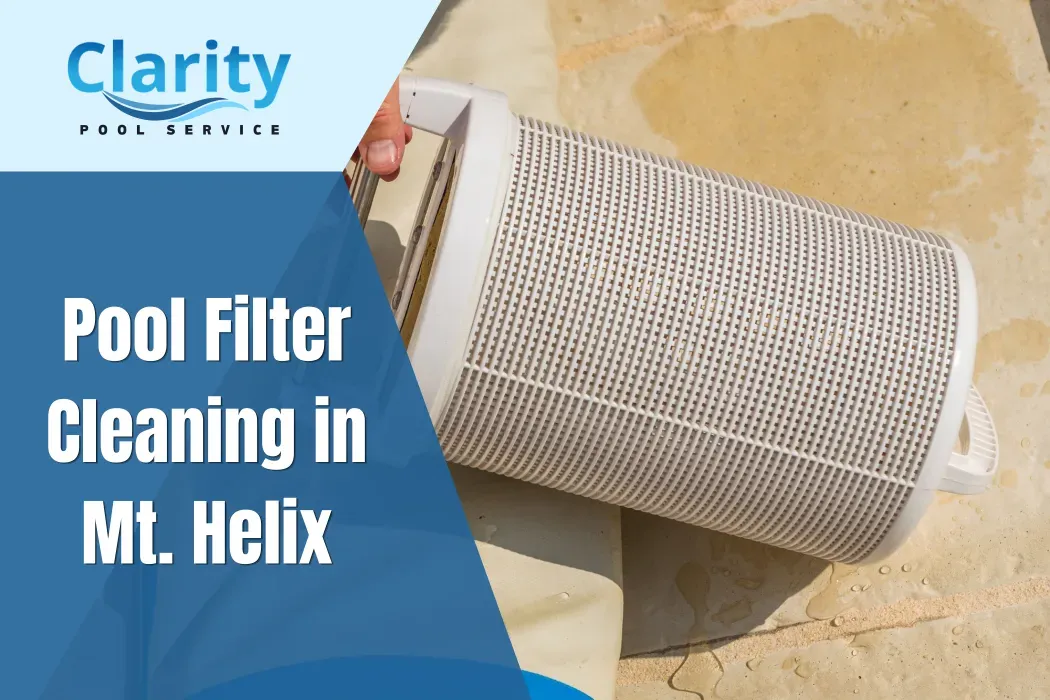
Pool Filter Cleaning in Mt. Helix: When Trees and Debris Overload Your Filter
A Homeowner’s Guide to Filter Pressure, Heavy Landscaping, and Cleaner Pool Water
A swimming pool surrounded by mature trees can look beautiful. But the same landscaping that creates privacy and shade can make filtration more demanding.
In Mt. Helix, some properties have large trees, sloped yards, established gardens, and outdoor areas where leaves, blossoms, and fine debris can reach the pool. When that material enters the water, the filter may have more work to do.
A common question is: How do I know when my pool filter actually needs cleaning?
The answer isn't simply “every three months.” Filter type, pressure, circulation, debris, and manufacturer instructions all matter.
Quick Answer: When Should You Clean a Pool Filter?
A pool filter should be cleaned or serviced when its condition and the manufacturer's instructions indicate it's necessary—not just because a calendar reminder appeared.
Look for a meaningful rise in pressure above the clean-filter baseline, reduced return flow, persistent cloudiness, or unusually heavy debris loading. Many manufacturers use a pressure increase of roughly 8–10 psi above clean pressure as a cleaning cue, but the correct threshold varies by model.
Never open a pressurized filter. Shut down the system and follow the manufacturer's pressure-release procedure, or have a qualified technician handle the service.
Filter Problems at a Glance
What you notice | What it might mean | First response |
Pressure higher than normal | Filter is collecting debris or flow conditions changed | Compare with clean baseline and manual |
Weak return flow | Restriction, valve issue, suction problem, or pump issue | Check baskets and operating conditions |
Cloudy water | Chemistry, algae, filtration, or circulation issue | Test water and inspect system |
Debris returning to pool | Possible filter-component or valve problem | Arrange filter inspection |
Pressure unusually low | Reduced flow, air, or suction restriction | Check water level, baskets, and pump |
Heavy leaves after wind | Baskets and filter may load faster | Remove debris and monitor circulation |
Why Landscaping Can Increase Filter Workload
Leaves are easy to spot on the surface, but they're only part of the picture.
Blossoms, pollen, small plant fragments, and fine dirt may enter the water and eventually reach the filtration system. Larger debris should be captured by skimmer and pump baskets; finer particles are left for the filter to collect.
This is particularly relevant for Mt. Helix properties with mature landscaping or trees overhanging the pool. A sheltered pool with minimal vegetation may have very different filter-maintenance needs from one beneath large trees.
When debris collects faster, the filter can become loaded sooner. That doesn't mean every tree-lined pool needs more frequent scheduled cleanings. It means the filter should be monitored according to the conditions at that property.
What Filter Pressure Is Telling You
Most pool filters have a pressure gauge. The number becomes useful when you know the pressure immediately after the filter has been properly cleaned, with the pump running at a documented speed.
Suppose your clean pressure is 12 psi. If the same pump setting later produces 21 psi, that's a 9 psi increase worth evaluating against the manufacturer's cleaning guidance.
But don't compare a low-speed variable-pump reading with a high-speed reading. Pump speed changes filter pressure, so the comparison needs to use the same operating conditions.
A low reading isn't always good news either. It can indicate reduced flow because of a full basket, low water level, air entering the suction side, or another restriction.
Pressure is a clue, not a complete diagnosis.
Cartridge, DE, and Sand Filters: Different Maintenance Needs
Mt. Helix pools may use different filtration systems. Each requires a different approach.
Cartridge Filters
Cartridge filters use pleated elements to capture particles. Cleaning generally involves shutting down and safely depressurizing the system, removing the elements, and rinsing them according to manufacturer instructions.
Cartridges eventually need replacement when they are damaged, no longer clean effectively, or cannot maintain normal operation.
DE Filters
Diatomaceous earth (DE) filters use filter grids or elements coated with DE powder. Some systems allow backwashing, while periodic disassembly and grid cleaning may also be necessary.
The correct DE quantity and servicing method depend on the filter model. Damaged grids or internal components can allow DE to return to the pool.
Sand Filters
Sand filters typically use backwashing to remove accumulated contaminants, following the manufacturer's instructions. They may also require inspection or media service when performance declines.
No single filter-cleaning schedule fits all three systems.
After Santa Ana Winds: What to Do First
A strong wind event can leave a pool full of leaves, dust, and organic material.
Before assuming the filter needs cleaning, start with what you can remove physically:
Skim large floating debris and remove settled leaves when practical.
Check skimmer baskets and clear excessive buildup.
With the pump safely off, clean the pump basket according to the equipment instructions.
Confirm normal water level and circulation.
Check filter pressure under normal operating conditions.
Fine dust may require additional vacuuming or filtration time. If the filter becomes loaded during cleanup, it may need service sooner than usual.
The goal is to avoid forcing a heavily contaminated pool to rely on the filter for material that could have been removed with a net or vacuum.
Is the Filter Dirty—or Is Something Else Wrong?
A pool can have cloudy water even with a clean filter.
Before recommending another filter cleaning, consider the water chemistry, sanitizer level, circulation, and signs of algae.
Similarly, weak return flow doesn't prove the filter is dirty. Full baskets, valve settings, suction-side air, and pump issues can cause similar symptoms.
If fine material appears to blow back into the pool through the return jets, a technician may need to inspect filter elements, internal seals, or valve operation.
Cleaning the filter again won't repair a damaged component.
How Professional Filter Cleaning Helps
Professional filter service should be more than a quick rinse.
Depending on the filter type and condition, a technician may:
Record pressure and inspect circulation before service
Shut down and safely depressurize the equipment
Clean the appropriate elements or media
Inspect accessible components for damage
Reassemble the system correctly
Restore operation and check for leaks
Record the new clean operating pressure
Not every filter requires complete disassembly at every visit. The service should match the equipment and manufacturer guidance.
Filter cleaning is also commonly priced separately from routine weekly pool maintenance, so homeowners should confirm what's included in their agreement.
When to Schedule Filter Cleaning in Mt. Helix
Rather than relying on a fixed interval alone, consider scheduling a filter inspection when you notice a combination of changes:
Pressure consistently exceeds the manufacturer’s recommended increase from clean pressure
Return flow remains weak after simple basket checks
The pool has experienced unusually heavy debris loading
Filtration performance appears to be declining
The filter is leaking or sending material back to the pool
For a pool with mature trees, keeping a record of pressure and cleaning dates can reveal seasonal patterns. You may discover that certain periods produce much heavier loading than others.
That history helps make maintenance more predictable.
Frequently Asked Questions
Do trees make pool filters dirty faster?
They can. Leaves, pollen, blossoms, and other debris increase the material entering the pool. Actual filter loading depends on how much is removed before it reaches the filter.
Should I clean my pool filter every month?
Not automatically. Use the manufacturer's guidance, the filter's clean-pressure baseline, circulation, and actual debris conditions.
Can a dirty filter cause algae?
Restricted filtration and circulation can contribute to conditions that make algae control harder, but inadequate sanitizer is a key factor. Cleaning the filter alone won't correct an algae outbreak.
Why is dirt returning to my pool after filter cleaning?
Possible causes include damaged filter elements, internal components, incorrect reassembly, or valve problems. A qualified technician should inspect the system.
Pool Filter Cleaning in Mt. Helix, CA
At Clarity Pool Service, we focus on maintaining healthy water, effective filtration, and reliable circulation for pools throughout Mt. Helix and East County San Diego.
Properties with mature landscaping or recurring debris may need closer filter monitoring, but that doesn't mean automatically cleaning equipment on an unnecessary schedule.
The objective is to identify when service is needed, perform it correctly, and help the pool operate normally afterward.
If your filter pressure keeps climbing, return flow is weakening, or your pool struggles with fine debris, professional filter evaluation may help identify the cause.
Learn more about Clarity Pool Service and our pool filter cleaning guide.
Final Thoughts
A tree-lined Mt. Helix backyard can create a wonderful pool setting—and a heavier debris workload.
The answer isn't cleaning the filter as often as possible.
It's removing debris early, monitoring pressure under consistent conditions, recognizing changes in flow, and servicing the filter when the equipment actually needs it.
Clean when needed. Diagnose before replacing. Keep the entire circulation system working together.