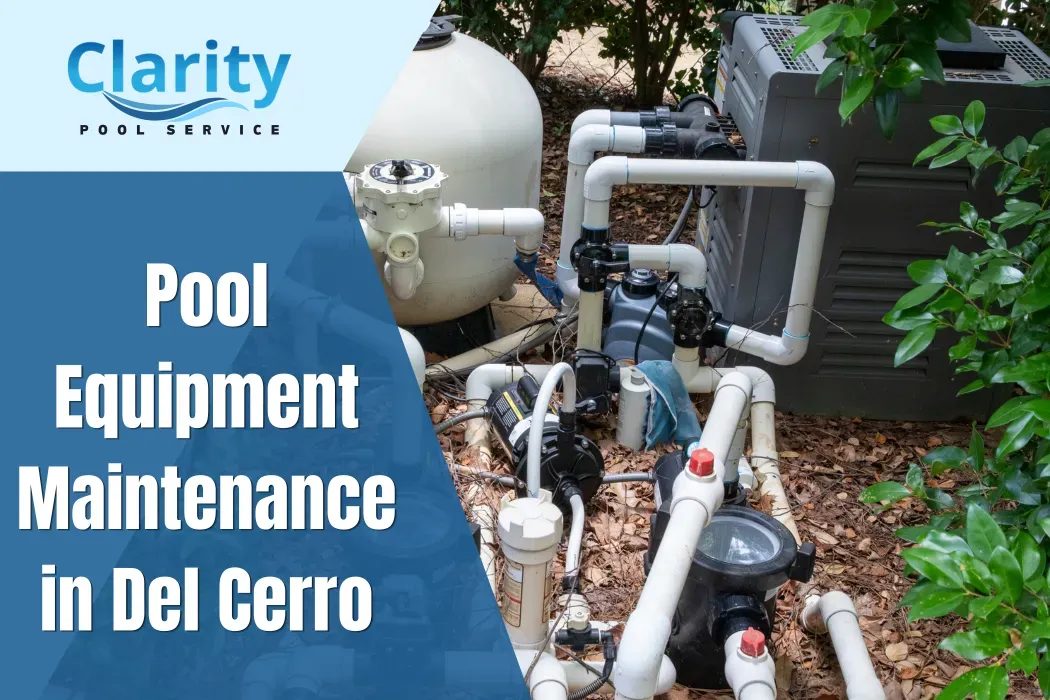
Pool Equipment Maintenance in Del Cerro: How to Prevent Costly Repairs
A Homeowner's Guide to Protecting Pool Pumps, Filters, Valves, and Equipment in Del Cerro, California
Your swimming pool can look perfectly clean while an equipment problem is developing behind the scenes.
A pump may begin leaking.
Filter pressure may slowly change.
A valve may become difficult to operate.
A heater may stop responding.
And a salt chlorine generator may produce less chlorine than expected.
For Del Cerro homeowners, routine equipment maintenance is an important part of protecting a swimming pool investment.
Many established residential pools have equipment systems that have been operating for years. Some have been upgraded with variable-speed pumps and automation, while others still use older plumbing and controls.
Regardless of age, the objective is the same:
Recognize small changes before they become major equipment failures.
Good preventative maintenance doesn't mean replacing equipment simply because it's old.
It means understanding normal operation, monitoring performance, and addressing problems when necessary.
Quick Answer: What Pool Equipment Needs Regular Maintenance?
The most important equipment components to monitor include:
Pool pump
Pool filter
Plumbing and valves
Heater
Salt chlorine generator, when installed
Automation and timers
Skimmer and pump baskets
Visible plumbing connections
A weekly pool service visit should include basic equipment observation, while filter cleaning, component repairs, and specialized maintenance are performed when needed.
The goal is preventative awareness—not unnecessary repairs or equipment replacement.
Pool Equipment Warning Signs at a Glance
Equipment | Warning sign | What it may indicate |
Pool pump | New grinding or screeching | Mechanical wear or another fault |
Pump basket | Persistent air | Suction-side air intrusion or low water |
Filter | Rising pressure | Filter loading or changing flow conditions |
Plumbing | Persistent drips | Seal, fitting, or connection problem |
Valves | Leaks or difficult movement | Worn seals or valve components |
Heater | Error messages | Flow, control, or heater problem |
Salt system | Low chlorine or warning | Chemistry, flow, cell, or control issue |
Automation | Missed schedules | Programming or control problem |
These symptoms provide clues. They don't automatically identify which component needs replacement.
1. Pool Pump Maintenance: Know What Normal Sounds Like
The pool pump moves water through the circulation system.
Without adequate circulation, filtration, sanitation, and other equipment may not operate properly.
One of the easiest preventative maintenance habits is learning how the pump normally sounds.
Pay attention to new:
Grinding
Screeching
Rattling
Excessive vibration
Unexpected shutdowns
Also look for water leaking around the pump housing or plumbing connections.
A new sound doesn't necessarily mean the pump has failed. But it should be investigated rather than ignored until the motor stops.
Homeowners should also become familiar with normal pump operation, including whether the pump basket remains filled with water and whether the system maintains prime.
A pump that runs isn't necessarily a pump that's operating correctly.
2. Pool Filter Maintenance: Pressure Matters
Your pool filter removes suspended contaminants from circulating water.
As debris accumulates, filter performance and pressure may change.
For homeowners, the most useful reference is the filter's normal clean operating pressure at a documented pump speed.
If pressure rises significantly above that baseline, the filter may need cleaning according to manufacturer guidance.
A pressure reading that suddenly becomes unusually low can also indicate reduced circulation.
Possible causes include full baskets, air entering the system, valve settings, or pump problems.
Don't assume every pressure change requires opening the filter.
Filter pressure should be evaluated together with return flow, water clarity, and equipment operation.
For more detail, see How Often Should a Pool Filter Be Cleaned?
3. Pool Valves and Plumbing: Small Leaks Deserve Attention
Valves control how water moves through the pool system.
Depending on the installation, they may direct flow between:
Pool and spa
Skimmers and main drains
Heaters
Water features
Return lines
Over time, seals, fittings, and other components can deteriorate.
Watch for persistent drips, water collecting around connections, or valves that become unusually difficult to operate.
A small leak may be repairable without replacing the entire plumbing assembly.
However, continuing to operate damaged components can sometimes lead to additional problems.
Before changing unfamiliar valve positions, photograph the existing configuration.
Incorrect valve settings can interfere with circulation or equipment operation.
4. Pool Heaters: Watch for Flow and Operating Problems
Pool heaters depend on several systems working correctly.
Adequate water flow is particularly important.
A heater that refuses to start may have an internal fault, but it may also be responding to inadequate circulation.
Before assuming the heater needs replacement, consider whether the pump, filter, and flow conditions are normal.
Record any displayed error messages.
Because heaters may involve gas, electricity, combustion, and pressurized water, internal heater diagnosis and repairs should be handled by appropriately qualified professionals.
Homeowners should never bypass safety switches or repeatedly reset equipment displaying serious faults.
5. Salt Chlorine Generators: Diagnose Before Replacing
Saltwater pools use a chlorine generator to produce sanitizer from dissolved salt.
The system requires appropriate salt concentration, water flow, chemistry, and operating conditions.
When chlorine becomes low, homeowners sometimes assume the salt cell has failed.
But other possible causes include:
Increased chlorine demand
Inadequate pump operating time
Low water flow
Incorrect output settings
Cell scale
Salt concentration outside the manufacturer's range
Before adding large amounts of salt or replacing an expensive cell, verify the water chemistry and operating conditions.
Salt cells eventually wear out, but replacement should follow diagnosis.
6. Variable-Speed Pumps and Automation
Modern variable-speed pumps allow homeowners to operate circulation equipment at different speeds throughout the day.
That can reduce energy use compared with unnecessarily operating at high speed.
However, pump programming must still support the pool's equipment.
A salt generator may require adequate flow.
A heater may require a minimum flow rate.
Certain cleaners and water features may also depend on specific pump speeds.
If equipment stops operating after programming changes, review the settings before assuming a component has failed.
Keep a record of normal schedules and speeds.
Photographs of control panels and equipment settings can be valuable during troubleshooting.
7. How Del Cerro's Environment Affects Pool Equipment
Del Cerro properties can have very different pool environments.
Some backyards feature mature landscaping and trees.
Others have open sun exposure, hillside settings, or equipment installed near retaining walls and landscaping.
These conditions can influence maintenance.
Landscaping Debris
Leaves and organic material may increase basket and filter loading.
Warm Weather
Higher chlorine demand can affect sanitizer-system operation and maintenance requirements.
Dust and Wind
Fine debris may increase filtration demand.
Equipment Placement
Equipment installed in confined or difficult-to-access locations may require additional attention to drainage, ventilation, and safe service access.
Not every Del Cerro pool faces these challenges.
The important thing is evaluating the actual property and equipment configuration.
8. When Does Pool Equipment Need Repair?
Not every warning sign requires immediate replacement.
A professional evaluation should consider:
What component failed
Equipment age
Overall condition
Repair history
Parts availability
Repair cost
Expected remaining service life
For example, a leaking seal may be a reasonable repair on an otherwise reliable pump.
A pump experiencing repeated major failures may be a stronger replacement candidate.
The decision should be based on the specific equipment—not simply its age.
Our Pool Equipment Repair vs. Replacement guide explains that decision in greater detail.
9. What Should Be Checked During Weekly Pool Service?
Weekly maintenance provides an opportunity to recognize developing equipment problems.
A technician should generally observe:
Pump operation
Filter pressure
Return flow
Visible leaks
Persistent air in the system
Equipment warnings
Salt-system operation when applicable
This isn't a complete mechanical inspection every week.
It is a preventative check designed to identify obvious changes.
When the same technician regularly services a pool, familiarity with normal operating conditions can make those changes easier to recognize.
10. When Should You Call a Professional Immediately?
Certain equipment conditions shouldn't wait for the next weekly visit.
Seek qualified assistance when you notice:
Repeated breaker trips
Electrical burning smell
Smoke
Major equipment leaks near electrical components
Severe overheating
Pump failure
Significant circulation loss
Rapid unexplained water loss
Avoid operating affected equipment when doing so could create a safety hazard or additional damage.
Do not open electrical enclosures or attempt internal repairs without the appropriate qualifications.
A Simple Equipment Maintenance Checklist
Homeowners can perform a quick visual check between professional visits.
What to check | What to look for |
Pump | Normal sound and operation |
Pump basket | Excessive air or debris |
Filter | Pressure changes |
Plumbing | New leaks |
Valves | Visible leaks or damage |
Salt system | Warnings or unusual readings |
Heater | Error messages |
Automation | Correct schedules |
Return jets | Normal water movement |
You don't need to disassemble equipment.
You're simply looking for meaningful changes.
Frequently Asked Questions About Pool Equipment Maintenance
How often should pool equipment be inspected?
Basic visual observation should be part of routine weekly maintenance. More detailed inspections and service depend on equipment condition, manufacturer recommendations, and operating problems.
Should I replace my pool pump because it's old?
Not automatically. Age is one factor, but condition, efficiency, repair history, parts availability, and repair cost should guide the decision.
Can a dirty filter damage my pool pump?
Severe circulation restrictions can create undesirable operating conditions. Filter maintenance should be based on pressure, flow, and manufacturer guidance rather than waiting for major problems.
Why does my pool pump have air inside?
Possible causes include low water level, suction-side air intrusion, pump-lid sealing problems, or other circulation conditions. Persistent air should be investigated.
Can professional weekly service prevent equipment failure?
Routine observation may identify developing problems earlier, but it cannot prevent every mechanical or electrical failure.
Professional Pool Equipment Maintenance in Del Cerro, CA
At Clarity Pool Service, we believe reliable pool maintenance involves more than clean water.
Our weekly service approach includes water testing, cleaning, filtration monitoring, circulation observation, and basic equipment awareness.
For Del Cerro homeowners, that means paying attention to changes that may indicate developing problems with pumps, filters, valves, salt systems, or other pool equipment.
The objective is to identify concerns early, explain them clearly, and help homeowners make informed maintenance decisions.
Learn more about our pool services or contact Clarity Pool Service to discuss your pool's maintenance needs.
Final Thoughts
Pool equipment rarely becomes more reliable when warning signs are ignored.
A small leak, unusual pump sound, or changing filter pressure may be the first indication that something needs attention.
But those symptoms don't automatically justify replacing expensive equipment.
The better approach is straightforward:
Know normal operation.
Recognize changes.
Investigate the cause.
Repair or replace when appropriate.
For Del Cerro homeowners, consistent preventative maintenance helps protect the entire pool system—not just the water.