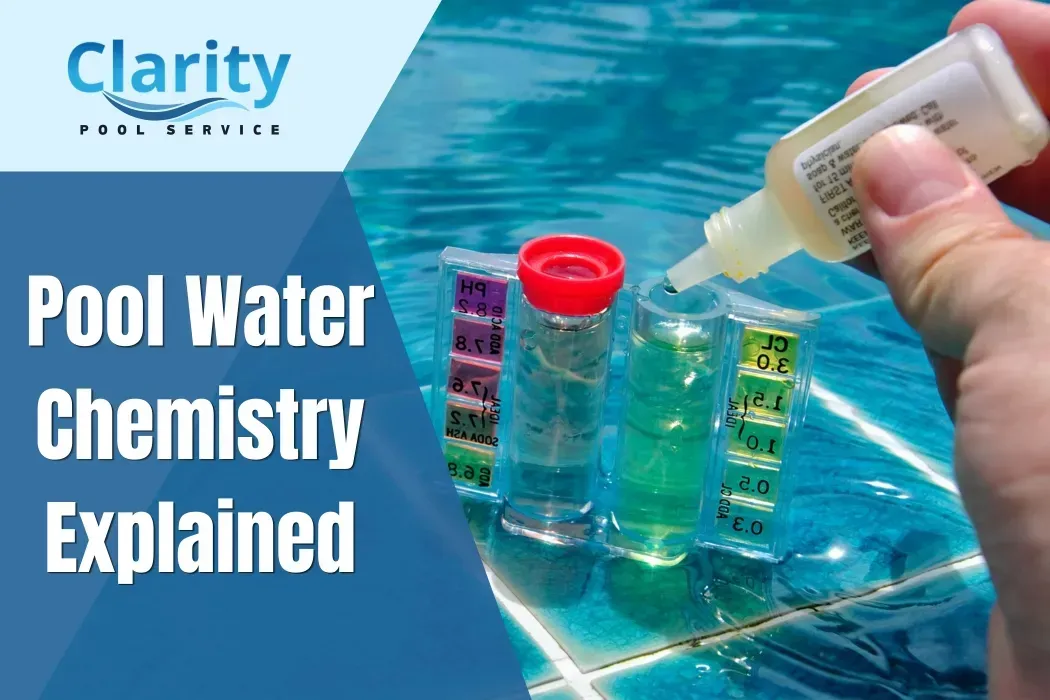
Pool Water Chemistry Explained
A Complete Homeowner's Guide to Balanced, Healthy Pool Water in East County San Diego
Many homeowners think pool maintenance is simply adding chlorine whenever the water starts looking cloudy. In reality, healthy pool water depends on several chemical measurements working together—not just one. A swimming pool can appear perfectly clear while its chemistry is already drifting out of balance.
Likewise, adding more chlorine doesn't always solve water quality problems if other chemical levels are preventing the sanitizer from working effectively. That's why professional pool maintenance focuses on water balance, not simply chemical additions.
When properly balanced, pool water helps:
Keep swimmers comfortable
Improve sanitizer effectiveness
Protect pool finishes
Reduce algae growth
Extend equipment life
Maintain clear water
When water becomes unbalanced, homeowners may experience cloudy water, algae, scale buildup, corrosion, equipment problems, and higher maintenance costs.
Whether you own a pool in Santee, El Cajon, Lakeside, Rancho San Diego, Fletcher Hills, Mt. Helix, Spring Valley, Lemon Grove, San Carlos, Allied Gardens, Del Cerro, Casa de Oro, or elsewhere in East County San Diego, understanding the basics of water chemistry helps you become a more informed pool owner.
In this guide you'll learn:
What pool water chemistry really means
Why balanced water is important
The major chemical measurements professionals monitor
Common water balance problems
Warning signs homeowners should recognize
How routine maintenance keeps chemistry stable
By the end of this guide, you'll understand why water chemistry is the foundation of every healthy swimming pool.
Quick Answer
Pool water chemistry refers to the balance of several important chemical measurements that work together to maintain clean, safe, and comfortable swimming conditions.
Rather than focusing on chlorine alone, professional pool maintenance monitors the entire chemical profile, including:
Sanitizer levels
pH
Total alkalinity
Calcium hardness
Stabilizer (cyanuric acid)
Salt concentration (saltwater pools)
Balanced chemistry helps chlorine work effectively while protecting pool surfaces, plumbing, heaters, filters, pumps, and other expensive equipment.
Routine testing and small weekly adjustments are generally far easier—and less expensive—than correcting severely unbalanced water.
At a Glance
Key Takeaways
✔ Water chemistry involves much more than chlorine.
✔ Every chemical measurement affects the others.
✔ Balanced water improves sanitizer performance.
✔ Proper chemistry protects equipment and pool finishes.
✔ Small weekly adjustments are easier than major corrections.
✔ Routine testing is the foundation of healthy pool maintenance.
Why Water Chemistry Matters
Many pool owners only think about chemistry when something goes wrong.
The water turns cloudy.
Algae appears.
Swimmers complain that their eyes burn.
Scale develops around the tile line.
By the time these symptoms appear, the chemistry has often been drifting away from ideal conditions for days—or even weeks.
Professional pool maintenance focuses on preventing these problems rather than reacting to them after they become obvious.
Balanced water provides several important benefits:
Better water clarity
More effective sanitation
Greater swimmer comfort
Longer equipment life
Reduced chemical waste
Lower likelihood of algae growth
Maintaining proper chemistry is one of the most valuable preventative maintenance practices a homeowner can perform.
The Six Measurements Every Pool Professional Monitors
Although there are many possible water tests, most residential pools rely on six core measurements that provide a complete picture of water balance.
These include:
1. Free Chlorine
Your primary sanitizer that helps control bacteria, algae, and other contaminants.
2. pH
Measures how acidic or basic the water is and strongly influences swimmer comfort and sanitizer effectiveness.
3. Total Alkalinity
Helps stabilize pH and reduces rapid chemical swings.
4. Calcium Hardness
Protects plaster, tile, and equipment while helping prevent corrosion or excessive scale formation.
5. Cyanuric Acid (Stabilizer)
Helps protect chlorine from being rapidly broken down by sunlight.
6. Salt Level (Saltwater Pools)
Allows the salt chlorine generator to produce chlorine efficiently.
Together, these measurements provide a complete picture of overall water health.
Why East County Pools Require Consistent Chemistry Monitoring
Pools throughout East County San Diego experience changing environmental conditions throughout the year.
Summer heat increases chlorine demand.
Spring introduces pollen and organic debris.
Santa Ana winds contribute dust and fine particles.
Heavy pool use during warm weather increases contaminant levels.
Because these conditions change continuously, regular testing helps maintain balanced chemistry before problems begin affecting water quality.
Understanding the Six Core Measurements
Now that we've introduced the six primary water chemistry measurements, let's look at why each one matters and how they work together to keep your pool healthy.
One of the biggest misconceptions homeowners have is that each chemical can be managed independently.
In reality, pool chemistry is a system.
Changing one measurement often affects several others, which is why professional pool technicians evaluate the entire water profile before making adjustments.
Understanding the purpose of each measurement helps explain why balanced water is far more important than simply adding more chlorine.
1. Free Chlorine — Your Pool's Primary Sanitizer
Free chlorine is responsible for destroying bacteria, algae, and other organic contaminants that enter your swimming pool.
Every day, chlorine works continuously to sanitize the water as swimmers, leaves, pollen, insects, and environmental debris introduce new contaminants.
Without enough sanitizer, algae can begin developing surprisingly quickly.
Professional pool service includes routine chlorine testing because sanitizer levels naturally change due to:
Sunlight
Water temperature
Swimmer activity
Rain
Organic debris
Windblown contaminants
Maintaining consistent sanitizer levels is one of the most effective ways to prevent cloudy water and algae.
2. pH — One of the Most Important Water Measurements
If chlorine is the pool's disinfectant, pH determines how effectively that chlorine can do its job.
pH measures how acidic or basic the pool water is.
When pH drifts outside the recommended range, homeowners may notice:
Reduced sanitizer efficiency
Cloudy water
Eye irritation
Skin discomfort
Scale formation
Corrosion over time
Even if chlorine levels appear acceptable, improper pH can significantly reduce overall water quality.
That's why pH is tested during every professional maintenance visit.
3. Total Alkalinity — The Chemistry Stabilizer
Total alkalinity helps stabilize pH.
Without proper alkalinity, pH can fluctuate rapidly, making water chemistry difficult to maintain.
Think of alkalinity as a buffer that helps prevent sudden chemical swings.
Stable alkalinity often leads to:
More consistent pH
Easier chemical balancing
Improved swimmer comfort
Better equipment protection
Rather than constantly chasing pH changes, maintaining proper alkalinity helps create a more stable chemical environment.
4. Calcium Hardness — Protecting Pool Surfaces and Equipment
Calcium hardness measures the amount of dissolved calcium in the water.
Both low and high calcium levels can create problems.
Water with insufficient calcium may become aggressive toward plaster and other cement-based surfaces.
Excessively high calcium levels may contribute to:
Scale buildup
Cloudy water
Salt cell scaling
Heater efficiency problems
Reduced equipment performance
Maintaining balanced calcium helps protect both the pool finish and expensive equipment.
5. Cyanuric Acid (Stabilizer)
Sunlight naturally breaks down chlorine.
Cyanuric acid helps protect chlorine from being destroyed too quickly by ultraviolet (UV) rays.
Without stabilizer, chlorine may be consumed rapidly during sunny weather.
Too much stabilizer, however, can reduce chlorine's effectiveness.
Maintaining the proper balance allows sanitizer to remain effective while lasting longer throughout the day.
This becomes especially important during East County San Diego's long, sunny summers.
6. Salt Level (Saltwater Pools)
For saltwater pools, maintaining the proper salt concentration allows the chlorine generator to operate efficiently.
If salt levels become too low:
Chlorine production may decrease.
Warning lights may appear.
Water quality may begin declining.
If salt levels become too high:
Equipment warnings may occur.
Water replacement may eventually be required.
Some components may experience unnecessary stress.
Routine monitoring helps keep the generator operating within its intended range.
How These Measurements Work Together
One of the biggest reasons homeowners become frustrated with pool chemistry is because they focus on only one measurement.
For example:
Adding chlorine without checking pH may not solve poor sanitation.
Correcting pH without understanding alkalinity may lead to repeated fluctuations.
Ignoring calcium hardness can contribute to scaling or surface damage.
Improper stabilizer levels can reduce chlorine performance even when chlorine readings appear acceptable.
Professional pool maintenance evaluates the complete chemical profile, allowing technicians to make informed adjustments rather than treating individual numbers in isolation.
Common Water Chemistry Problems
When chemistry drifts out of balance, homeowners often notice similar symptoms.
Some of the most common include:
Cloudy Water
Often associated with poor filtration, water imbalance, heavy swimmer use, or developing algae.
Green Water
Usually indicates algae growth resulting from ineffective sanitation or water imbalance.
Scale Formation
White or rough mineral deposits may develop on:
Tile
Salt cells
Heaters
Pool surfaces
Water features
Balanced water chemistry helps reduce the likelihood of excessive scale.
Corrosion
Improper water balance can gradually damage:
Metal fixtures
Heater components
Pumps
Plumbing
Pool finishes
Preventative maintenance helps reduce unnecessary wear.
Eye and Skin Irritation
Many homeowners assume chlorine causes discomfort.
More often, irritation results from improperly balanced water rather than chlorine alone.
Balanced chemistry improves swimmer comfort while helping sanitizer work more efficiently.
What We Commonly See Throughout East County
Throughout East County San Diego, environmental conditions frequently influence water chemistry.
During extended summer heat, pools typically experience:
Increased chlorine demand
Higher evaporation
More swimmer activity
Spring often introduces:
Pollen
Blossoms
Organic debris
Following Santa Ana wind events, technicians frequently encounter:
Dust
Fine dirt
Additional organic contamination
These seasonal changes don't necessarily create water problems—but they do reinforce why routine testing and small weekly adjustments are far more effective than waiting until visible issues appear.
Why Weekly Testing Makes Such a Difference
Water chemistry doesn't usually become severely unbalanced overnight.
Small changes occur gradually.
Routine weekly testing allows technicians to make small corrections before problems affect:
Water clarity
Equipment performance
Swimmer comfort
Sanitizer effectiveness
This preventative approach is one of the primary reasons professionally maintained pools generally experience fewer algae outbreaks, healthier equipment, and more consistent water quality throughout the year.
DIY Water Testing vs. Professional Water Balancing
Many homeowners enjoy maintaining their own pools and successfully test and adjust their water chemistry on a regular basis.
For others, water chemistry quickly becomes confusing.
One test shows the chlorine is low.
Another indicates the pH needs adjustment.
Then alkalinity changes, and suddenly several numbers appear to be moving at once.
This is why professional pool maintenance focuses on water balance as a complete system rather than correcting one measurement at a time.
Whether you choose DIY maintenance or professional service, understanding how the chemistry works helps you make better decisions for your pool.
DIY Water Testing vs. Professional Weekly Service
Many homeowners are fully capable of testing their own water.
The biggest advantage of professional service isn't simply performing the tests—it's understanding how each chemical measurement affects the others and making adjustments before problems develop.
Common Water Chemistry Mistakes
Most chemistry problems aren't caused by a lack of effort.
They're caused by misunderstanding how pool water behaves.
These are some of the most common mistakes professionals encounter.
Focusing Only on Chlorine
One of the biggest misconceptions is believing chlorine alone determines whether pool water is healthy.
In reality, chlorine works together with:
pH
Total alkalinity
Stabilizer
Calcium hardness
Water circulation
Filtration
Adding more chlorine without addressing the rest of the chemistry often produces disappointing results.
Waiting Until the Water Looks Bad
Water chemistry usually becomes unbalanced long before visible problems appear.
By the time homeowners notice:
Cloudy water
Eye irritation
Scale
the chemistry has often been drifting away from ideal conditions for several days.
Routine testing allows small corrections before larger problems develop.
Making Large Chemical Adjustments
When homeowners discover chemistry problems, it's tempting to make several large corrections at once.
Unfortunately, major adjustments can sometimes create additional imbalance.
Professional maintenance generally relies on small, measured corrections followed by retesting to verify the results.
Gradual adjustments are usually easier to manage and produce more predictable outcomes.
Ignoring Seasonal Changes
Pool chemistry isn't the same year-round.
Throughout East County San Diego, environmental conditions continuously influence water balance.
Examples include:
Summer heat increasing chlorine demand
Spring pollen increasing organic contamination
Heavy rainfall affecting water balance
Santa Ana winds introducing dust and debris
Successful pool maintenance adapts to these seasonal changes rather than assuming chemistry remains constant.
Assuming Clear Water Means Balanced Water
This is one of the most common misconceptions.
A pool can appear perfectly clear while:
Sanitizer levels are declining
pH is drifting
Alkalinity is unstable
Calcium hardness is becoming problematic
Professional testing confirms what the water actually needs instead of relying on appearance alone.
Seasonal Water Chemistry
Although water chemistry is important all year, different seasons create different maintenance priorities.
Spring
As temperatures begin warming, pools often experience:
Increased pollen
Blossoms
Rising chlorine demand
Greater organic contamination
Routine testing helps prepare the pool for the busy swim season ahead.
Summer
Summer places the greatest demand on water chemistry.
Higher temperatures combined with increased swimming activity typically require:
More frequent sanitizer adjustments
Closer pH monitoring
Greater attention to water balance
Routine inspections
This is one of the reasons weekly professional maintenance becomes especially valuable during the hottest months.
Fall
As leaves begin falling, organic debris places additional demand on chlorine and filtration.
Routine maintenance focuses on:
Removing debris quickly
Maintaining sanitizer
Monitoring circulation
Keeping chemistry stable despite changing weather
Winter
Even if the pool is used less frequently, water chemistry continues changing.
Rain, cooler temperatures, and ongoing equipment operation all influence water balance.
Consistent maintenance throughout winter often prevents significant chemistry problems when warmer weather returns.
When Should You Call a Professional?
Some water chemistry adjustments are straightforward.
Others become more difficult when multiple measurements are out of balance at the same time.
Professional service may be helpful if you notice:
Water repeatedly becoming cloudy
Difficulty maintaining chlorine
Persistent pH problems
Scale buildup
Eye or skin irritation despite balanced chlorine
Unusual water appearance
Recurring chemistry problems after repeated adjustments
Correctly diagnosing the cause is often more important than adding additional chemicals.
Why Balanced Water Saves Money
Many homeowners think water chemistry is only about keeping the pool safe for swimming.
In reality, balanced water also protects expensive equipment.
Proper chemistry helps reduce:
Scale formation
Corrosion
Premature equipment wear
Heater damage
Salt cell scaling
Chemical waste
It also improves:
Water clarity
Swimmer comfort
Sanitizer efficiency
Equipment performance
Small weekly adjustments often prevent repairs and corrective treatments that cost far more than routine maintenance.
Continue Learning
Want to better understand how your pool works?
Continue with these homeowner guides:
Pool Service Cost in East County San Diego
What Does Weekly Pool Service Include?
Why Do Pools Turn Green?
Saltwater Pool Maintenance Guide
How Often Should a Pool Filter Be Cleaned?
Signs Your Pool Equipment Needs Repair
Complete Pool Owner Learning Center
Each guide builds on the previous one, helping homeowners throughout East County San Diego make informed maintenance decisions while protecting their investment.
Frequently Asked Questions About Pool Water Chemistry
Pool water chemistry can seem intimidating at first, but understanding the basics makes maintaining a healthy swimming pool much easier.
Below are answers to the questions homeowners throughout East County San Diego ask most often.
What is pool water chemistry?
Pool water chemistry is the balance of several measurements that work together to keep your swimming pool clean, safe, comfortable, and properly sanitized.
Rather than focusing only on chlorine, healthy pool water depends on maintaining the proper relationship between:
Free chlorine
pH
Total alkalinity
Calcium hardness
Cyanuric acid (stabilizer)
Salt concentration (saltwater pools)
When these measurements remain balanced, your pool is easier to maintain and your equipment is better protected.
Why is balanced water chemistry so important?
Balanced water chemistry helps:
Keep swimmers safe
Improve chlorine effectiveness
Maintain clear water
Prevent algae growth
Protect pool surfaces
Extend equipment life
Improve swimmer comfort
Proper water balance is one of the most important parts of long-term pool maintenance.
How often should pool water be tested?
For most residential swimming pools, water should be tested at least weekly.
Additional testing may be appropriate after:
Heavy rain
Large pool parties
Extreme heat
Adding significant amounts of water
Algae treatment
Equipment repairs
Routine testing allows small adjustments before larger chemistry problems develop.
Is chlorine the most important pool chemical?
Chlorine is one of the most important chemicals because it sanitizes the water.
However, chlorine cannot work efficiently without proper water balance.
Measurements such as pH, alkalinity, stabilizer, and calcium hardness all influence overall water quality and chlorine performance.
Professional pool maintenance evaluates the entire chemical profile—not just chlorine.
Why is my pool cloudy if chlorine levels are normal?
Cloudy water can result from several different issues, including:
Water chemistry imbalance
Poor filtration
Heavy swimmer use
Fine debris
Early algae growth
Circulation problems
A normal chlorine reading doesn't automatically mean the entire water chemistry is balanced.
Can improper water chemistry damage pool equipment?
Yes. Poorly balanced water may contribute to:
Scale buildup
Corrosion
Heater damage
Salt cell scaling
Pump wear
Reduced equipment efficiency
Maintaining balanced chemistry helps protect expensive pool equipment while improving overall system performance.
Does hot weather affect water chemistry?
Absolutely. Throughout East County San Diego, extended summer heat often increases:
Chlorine demand
Water evaporation
Swimmer use
Organic contamination
These conditions typically require closer monitoring and routine chemical adjustments.
Why does my pH keep changing?
Several factors influence pH, including:
Water movement
Aeration
Rainfall
Chemical additions
Overall alkalinity
Pool usage
Because pH naturally changes over time, routine testing is an important part of preventative maintenance.
Can I balance pool water myself?
Many homeowners successfully maintain their own pool chemistry. However, balancing water correctly requires understanding how multiple chemical measurements interact. Professional maintenance provides experience interpreting test results and making gradual adjustments before larger problems develop.
Does rain affect pool chemistry?
Yes. Heavy rainfall can:
Dilute sanitizer levels
Change pH
Affect alkalinity
Introduce organic debris
Increase contaminant levels
Testing the water after significant rain helps determine whether adjustments are needed.
Why does my pool burn my eyes?
Many homeowners assume chlorine causes eye irritation. In many cases, discomfort is actually related to poorly balanced water, particularly improper pH or inadequate sanitation. Maintaining balanced chemistry helps create a more comfortable swimming experience.
Is water chemistry included with weekly pool service?
Yes. One of the primary responsibilities of professional weekly pool service is testing and balancing water chemistry. Routine maintenance helps keep the water consistently balanced while reducing the likelihood of algae, cloudy water, and equipment problems.
Final Thoughts
Healthy swimming pools don't happen by accident.
They result from consistent water testing, careful chemical balancing, proper filtration, healthy circulation, and routine preventative maintenance working together every week.
Although water chemistry may seem complicated at first, the goal is actually quite simple:
Create an environment where sanitizer works efficiently, swimmers remain comfortable, equipment stays protected, and water remains clean and clear throughout the year.
Waiting until the water looks cloudy or algae appears often means chemistry has already been drifting out of balance for several days.
Routine testing and small adjustments are almost always easier—and more affordable—than correcting major water quality problems later.
Whether you maintain your own pool or hire a professional, understanding the basics of water chemistry helps you make informed decisions that protect your investment for years to come.
Continue Exploring the Pool Owner Learning Center
Ready to learn more about professional pool care?
Continue with these homeowner guides:
Signs Your Pool Equipment Needs Repair
Complete Pool Owner Learning Center
Together, these guides help homeowners throughout East County San Diego understand every major aspect of pool ownership—from water chemistry and filtration to equipment care and preventative maintenance.
Build a Healthier Pool Through Better Water Chemistry
Balanced water chemistry is one of the best investments you can make in your swimming pool.
When water is properly maintained, chlorine works more effectively, equipment lasts longer, swimmers are more comfortable, and costly problems like algae, scale, and corrosion are far less likely to occur.
At Clarity Pool Service, we believe education is part of great service. Our Learning Center is designed to help homeowners understand the "why" behind pool maintenance so they can make confident decisions about caring for their investment.
Whether you're maintaining your own pool or looking for dependable weekly pool service in East County San Diego, understanding water chemistry is the foundation of long-term pool health.