Saltwater Pool Maintenance
A Complete Homeowner's Guide to Caring for a Saltwater Pool in East County San Diego
Saltwater pools have become increasingly popular because they offer a comfortable swimming experience, eliminate the need to manually add chlorine as often, and simplify many aspects of routine pool care.
However, one of the biggest misconceptions among homeowners is that a saltwater pool is maintenance-free.
It isn't.
A saltwater pool still requires regular water testing, balanced chemistry, routine cleaning, equipment inspections, and ongoing maintenance to remain healthy.
The difference is how chlorine is produced—not whether maintenance is required.
Instead of manually adding chlorine tablets or liquid chlorine as the primary sanitizer, a saltwater pool uses a salt chlorine generator (often called a salt cell) to produce chlorine from dissolved salt in the water.
When properly maintained, this system provides consistent sanitation while reducing the fluctuations commonly associated with manually chlorinated pools.
Like any piece of pool equipment, however, the salt system requires routine inspection and cleaning to perform efficiently.
Whether you own a saltwater pool in Santee, El Cajon, Lakeside, Rancho San Diego, Fletcher Hills, Mt. Helix, Spring Valley, Lemon Grove, San Carlos, Allied Gardens, Del Cerro, Casa de Oro, or elsewhere in East County San Diego, understanding how your system works will help you keep your water cleaner, extend equipment life, and reduce unnecessary repair costs.
In this guide you'll learn:
How a saltwater pool works
What maintenance is still required
How often a salt cell should be cleaned
Common problems homeowners experience
Signs your salt system needs attention
Tips for extending the life of your equipment
By the end of this guide, you'll understand why saltwater pools are often easier to maintain—but never maintenance-free.
Quick Answer
A saltwater pool still requires weekly professional maintenance or consistent DIY care.
Routine maintenance typically includes:
Water testing
Chemical balancing
Surface cleaning
Brushing
Vacuuming
Basket cleaning
Equipment inspection
Monitoring salt levels
Inspecting the salt chlorine generator
Cleaning the salt cell when necessary
The biggest difference between a traditional chlorine pool and a saltwater pool is how chlorine is produced—not the amount of maintenance required.
Properly maintaining the salt system helps keep chlorine production consistent while extending the life of expensive equipment.
At a Glance
Key Takeaways
✔ Saltwater pools still require regular maintenance.
✔ Salt systems generate chlorine—they do not eliminate the need for water balancing.
✔ Salt cells should be inspected regularly and cleaned only when necessary.
✔ Balanced water chemistry helps protect both the pool surface and salt system.
✔ Preventative maintenance extends equipment life and reduces repair costs.
✔ Weekly inspections help identify developing problems before chlorine production is affected.
How Does a Saltwater Pool Work?
Despite the name, a saltwater pool is still a chlorinated pool.
The difference is simply the source of the chlorine.
Instead of regularly adding chlorine tablets or liquid chlorine as the primary sanitizer, dissolved salt passes through a device called a salt chlorine generator.
As water flows through the salt cell, the system converts dissolved salt into chlorine, helping sanitize the water continuously while the circulation system is operating.
This process provides several advantages:
More consistent sanitizer production
Fewer dramatic swings in chlorine levels
Softer-feeling water for many swimmers
Reduced need to manually add chlorine
However, chlorine is still being produced—and the system still depends on balanced water chemistry and properly functioning equipment.
Why Saltwater Pools Still Need Weekly Maintenance
One of the most common misconceptions is that saltwater pools "take care of themselves."
In reality, homeowners still need to monitor:
Water chemistry
pH
Alkalinity
Salt concentration
Calcium levels
Water circulation
Filter performance
Equipment operation
Leaves, pollen, dirt, insects, and algae don't care whether a pool uses traditional chlorine or a salt system.
Routine maintenance remains the foundation of healthy pool ownership.
What Makes Saltwater Pools Different in East County?
Throughout East County San Diego, long periods of warm weather and intense summer sun increase chlorine demand regardless of the sanitizing method.
Saltwater systems often perform exceptionally well under these conditions—but only when:
Water chemistry remains balanced.
Salt levels stay within the recommended range.
The salt cell is clean and producing chlorine efficiently.
Circulation and filtration systems operate properly.
Consistent maintenance helps ensure the system can keep up with changing conditions throughout the year.
What Maintenance Does a Saltwater Pool Actually Need?
One of the biggest advantages of a saltwater pool is that the system continuously produces chlorine while your pump is running.
However, that doesn't eliminate routine maintenance.
In fact, the overall maintenance checklist for a saltwater pool looks very similar to a traditional chlorine pool. The primary difference is that you'll also need to monitor and maintain the salt chlorine generator.
A comprehensive weekly maintenance routine should include:
Water testing
Chemical balancing
Surface skimming
Brushing walls and steps
Vacuuming as needed
Emptying skimmer and pump baskets
Equipment inspection
Filter pressure checks
Salt system inspection
Monitoring chlorine production
Each of these tasks plays an important role in keeping your pool clean, safe, and operating efficiently.
1. Test the Water Every Week
Even though a salt system generates chlorine automatically, water chemistry still changes continuously.
Professional weekly testing typically includes:
Free chlorine
pH
Total alkalinity
Calcium hardness
Cyanuric acid (stabilizer)
Salt concentration
These readings work together to determine how efficiently your salt system produces chlorine.
Many homeowners are surprised to learn that the salt level itself is only one part of maintaining a healthy saltwater pool.
2. Maintain Balanced Water Chemistry
A saltwater pool still depends on balanced water chemistry to protect swimmers, equipment, and pool surfaces.
Proper water balance helps:
Improve sanitizer performance
Reduce scale formation
Prevent corrosion
Protect plaster and tile
Extend salt cell life
Improve swimmer comfort
Ignoring water chemistry can shorten the life of expensive equipment—even if the salt system is operating correctly.
3. Monitor Salt Levels
The salt chlorine generator can only produce chlorine if the salt concentration remains within the manufacturer's recommended operating range.
Salt levels naturally change over time because of:
Splash-out
Heavy rainfall
Partial draining
Backwashing (for applicable filter types)
Water replacement after repairs
Low salt levels reduce chlorine production.
Excessively high salt levels may trigger system warnings and can place unnecessary stress on equipment.
Routine testing helps maintain the proper balance.
4. Inspect the Salt Cell
The salt cell is the heart of the entire system.
As water passes through it, chlorine is generated to sanitize the pool.
During routine inspections, technicians typically look for:
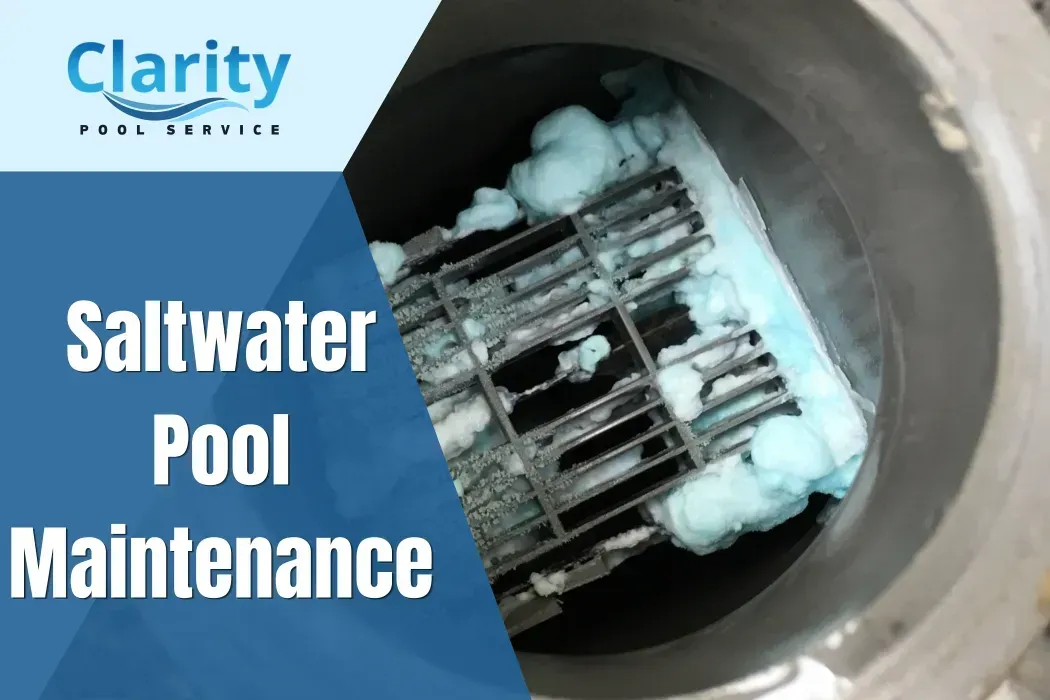
Scale buildup
Calcium deposits
Debris
Visible damage
Error messages
Proper chlorine production
A quick visual inspection often identifies developing problems before chlorine production begins to decline.
5. Clean the Salt Cell When Necessary
One of the most misunderstood parts of saltwater pool ownership is salt cell cleaning.
Many homeowners assume the cell should be cleaned on a fixed schedule.
In reality, it should generally be inspected regularly and cleaned only when scale buildup is present, following the manufacturer's recommendations.
Cleaning too frequently can unnecessarily shorten the life of the cell.
Cleaning too infrequently allows mineral deposits to reduce chlorine production.
A professional inspection helps determine when cleaning is actually needed.
6. Keep the Pool Clean
Saltwater pools collect the same debris as traditional chlorine pools.
Routine maintenance still includes:
Surface skimming
Brushing
Vacuuming
Basket cleaning
Removing leaves, insects, pollen, and dirt helps reduce chlorine demand while improving overall water quality.
A salt system works best when it isn't constantly fighting excessive organic contamination.
7. Monitor Filter Performance
A clean filter improves circulation and helps distribute sanitizer evenly throughout the pool.
During weekly service, technicians monitor filter pressure and overall circulation.
Restricted filtration may lead to:
Reduced water clarity
Poor sanitizer distribution
Increased equipment workload
Less efficient chlorine production
Routine filter maintenance helps the entire system perform more efficiently.
Common Saltwater Pool Problems
Most saltwater pool issues don't happen suddenly.
They usually develop gradually and provide warning signs before becoming major repairs.
Some of the most common issues include:
Low Salt Level
When salt concentration drops below the recommended operating range, the generator may reduce or stop chlorine production.
Common causes include water replacement, splash-out, and heavy rainfall.
Calcium Buildup on the Salt Cell
Mineral deposits gradually accumulate on the cell plates, reducing efficiency.
Routine inspections help identify buildup before chlorine production declines significantly.
Low Chlorine Production
If chlorine levels remain low despite adequate salt levels, possible causes include:
Dirty salt cell
Water chemistry imbalance
Heavy swimmer use
High summer temperatures
Aging salt cell
Equipment malfunction
Proper diagnosis prevents unnecessary part replacement.
High pH
Saltwater pools often require closer attention to pH than many homeowners expect.
Regular testing and adjustment help maintain efficient sanitizer performance while protecting pool finishes and equipment.
Equipment Warning Lights
Modern salt systems frequently display warning indicators when maintenance is required.
Common alerts may relate to:
Salt level
Water flow
Cell condition
Chlorine production
Ignoring these warnings may eventually affect water quality.
What We Commonly See Throughout East County
Saltwater pools throughout East County San Diego generally perform very well.
However, certain seasonal conditions deserve additional attention.
During long periods of summer heat, chlorine demand often increases significantly.
Spring pollen and windblown debris place additional demands on filtration systems.
Following Santa Ana wind events, pools commonly require additional skimming, brushing, and basket cleaning to maintain optimal water quality.
These seasonal conditions don't change how a saltwater pool works—they simply reinforce the importance of maintaining balanced chemistry and inspecting the salt system regularly.
Signs Your Saltwater System Needs Attention
Contact your pool professional if you notice:
Low chlorine readings
Persistent algae despite proper maintenance
Salt system warning lights
Visible scale on the salt cell
Cloudy water
Strong chlorine odor
Reduced water clarity
Error messages on the control panel
Unusual equipment operation
Addressing these warning signs early often prevents larger equipment repairs and helps keep chlorine production consistent.
DIY Saltwater Pool Care vs. Professional Maintenance
Many homeowners choose a saltwater pool because they believe it will require less work than a traditional chlorine pool.
In many ways, that's true.
Saltwater systems automate chlorine production, reducing the need to manually add sanitizer on a regular basis.
However, automation doesn't eliminate maintenance.
The system still depends on balanced water chemistry, proper circulation, a clean filter, and a functioning salt chlorine generator.
For homeowners who enjoy maintaining their own pool, DIY care can be rewarding.
For others, professional maintenance provides consistency, equipment monitoring, and peace of mind.
Neither approach is inherently better—the right choice depends on your experience, available time, and comfort level with pool maintenance.
DIY Saltwater Pool Care vs. Professional Weekly Service
A well-maintained saltwater pool still requires regular attention. The difference is that the chlorine generator automates one part of the maintenance process—not the entire system.
Common Saltwater Pool Mistakes
Many saltwater system problems aren't caused by equipment failure.
They're caused by small maintenance habits that gradually reduce system performance.
Fortunately, most are easy to avoid.
Assuming Saltwater Pools Don't Need Chlorine
This is by far the most common misconception.
Saltwater pools are chlorinated pools.
The only difference is that chlorine is produced by the salt chlorine generator instead of being manually added as the primary sanitizer.
Healthy chlorine levels remain just as important as they are in a traditional pool.
Cleaning the Salt Cell Too Often
Many homeowners believe routine acid cleaning should be performed on a schedule.
In reality, unnecessary cleaning can shorten the life of the cell.
The better approach is:
Inspect regularly.
Clean only when scale buildup is present.
Follow the manufacturer's recommendations.
Routine inspections are generally more valuable than routine cleaning.
Ignoring Water Balance
Some homeowners focus entirely on salt levels while overlooking overall water chemistry.
Salt concentration is only one piece of the puzzle.
Improper pH, alkalinity, calcium hardness, or stabilizer levels can all reduce chlorine production and contribute to equipment problems.
Maintaining balanced water chemistry helps the entire system perform more efficiently.
Waiting for Warning Lights
Modern salt systems often display alerts when something requires attention.
However, waiting until a warning appears isn't always the best maintenance strategy.
Routine inspections frequently identify:
Early scale buildup
Reduced chlorine production
Dirty baskets
Rising filter pressure
Small equipment leaks
before the system generates an error message.
Preventative maintenance almost always costs less than reactive repairs.
Ignoring Filter Maintenance
Even a perfectly functioning salt system cannot compensate for poor circulation.
A dirty filter reduces water flow throughout the pool, making sanitizer distribution less effective.
Routine filter maintenance helps maximize chlorine production while improving overall water quality.
Seasonal Saltwater Pool Care
Although the basic maintenance routine remains the same throughout the year, seasonal conditions often influence how much attention your saltwater pool requires.
Spring
As temperatures begin rising, homeowners should pay close attention to:
Pollen accumulation
Blossoms and organic debris
Water chemistry after winter
Salt level verification
Equipment inspection before swim season
Preparing the pool early helps reduce problems as temperatures continue increasing.
Summer
Summer places the greatest demand on most saltwater pools.
Higher temperatures and longer days increase chlorine consumption while pool usage typically reaches its peak.
Weekly maintenance often focuses on:
Monitoring chlorine production
Maintaining proper water balance
Inspecting the salt system
Removing debris
Checking circulation
Consistent weekly service becomes especially valuable during periods of prolonged heat.
Fall
As leaves begin falling, attention shifts toward debris management.
Pools surrounded by mature landscaping often require:
More frequent skimming
Basket cleaning
Additional brushing
Filter monitoring
Removing debris quickly helps reduce chlorine demand and improves overall system performance.
Winter
Even though many homeowners swim less during winter, the saltwater system still requires attention.
Water chemistry continues changing.
Equipment continues operating.
Storms introduce debris.
Weekly inspections help ensure the system remains ready for warmer weather while reducing the likelihood of springtime problems.
When Should You Call a Professional?
Some maintenance tasks are straightforward for experienced homeowners.
Others are best handled by a trained pool technician.
Consider scheduling professional service if you notice:
The pool repeatedly develops algae.
Chlorine levels remain low despite proper salt levels.
The salt system displays repeated error messages.
Scale quickly returns after cleaning.
Water chemistry is difficult to maintain.
Equipment appears to be leaking.
Water remains cloudy after balancing chemicals.
The salt cell isn't producing chlorine consistently.
Early diagnosis often prevents unnecessary part replacements and helps extend the life of expensive equipment.
Why Consistent Maintenance Extends Salt System Life
A salt chlorine generator is one of the most valuable pieces of equipment on a saltwater pool.
Like any mechanical system, its lifespan depends largely on how well it's maintained.
Routine inspections, balanced water chemistry, clean filters, and proper circulation all work together to reduce stress on the generator.
When the entire system operates efficiently, homeowners often experience:
More consistent chlorine production
Fewer service interruptions
Better water quality
Longer equipment life
Lower long-term maintenance costs
That's why professional maintenance focuses on the health of the entire pool—not just the salt cell itself.
Continue Learning
If you're learning more about saltwater pool ownership, these guides can help you build a complete understanding of professional pool care:
Pool Service Cost in East County San Diego
What Does Weekly Pool Service Include?
Why Do Pools Turn Green?
How Often Should Pool Filters Be Cleaned?
Pool Water Chemistry Explained
Signs Your Pool Equipment Needs Repair
Complete Pool Owner Learning Center
Each guide expands on a specific aspect of pool ownership, helping homeowners throughout East County San Diego make informed decisions while protecting their investment.
Frequently Asked Questions About Saltwater Pool Maintenance
Saltwater pools are often marketed as being easier to maintain than traditional chlorine pools, but they still require regular care to perform their best.
Below are answers to the questions homeowners throughout East County San Diego ask most often.
Are saltwater pools really maintenance-free?
No.
This is one of the biggest misconceptions about saltwater pools.
A saltwater pool still requires:
Weekly water testing
Chemical balancing
Surface cleaning
Brushing
Vacuuming
Equipment inspections
Filter maintenance
Salt system monitoring
The difference is that the salt chlorine generator automatically produces chlorine—it does not eliminate routine pool maintenance.
Do saltwater pools still use chlorine?
Yes.
A saltwater pool is still a chlorinated pool.
Instead of manually adding chlorine as the primary sanitizer, the salt chlorine generator converts dissolved salt into chlorine while the circulation system is operating.
The water remains properly sanitized using chlorine, just produced in a different way.
How often should a salt cell be cleaned?
There isn't one schedule that fits every pool.
A salt cell should be inspected regularly and cleaned only when mineral scale is present, following the manufacturer's recommendations.
Cleaning the cell more often than necessary can shorten its lifespan.
Routine inspections are generally more important than routine cleaning.
How long does a salt cell usually last?
The lifespan varies depending on:
Water chemistry
Calcium levels
Maintenance habits
Usage
Manufacturer
Proper water balance and regular inspections can help maximize the life of the salt chlorine generator.
Replacing a salt cell is a normal part of long-term pool ownership, but good maintenance can often extend its service life.
Why is my saltwater pool turning green?
A saltwater pool turns green for many of the same reasons as a traditional chlorine pool.
Common causes include:
Low chlorine production
Dirty salt cell
Poor water circulation
Unbalanced water chemistry
Dirty filter
Heavy debris
Delayed maintenance
The presence of a salt system does not eliminate the possibility of algae growth.
Does rain affect a saltwater pool?
Yes.
Heavy rainfall can dilute salt concentration and alter overall water chemistry.
After significant storms, it's a good idea to verify:
Salt level
Chlorine level
pH
Overall water balance
Routine maintenance after storms helps restore proper operating conditions.
Does a saltwater pool feel different?
Many homeowners describe properly balanced saltwater pools as feeling softer or smoother than traditionally chlorinated pools.
This sensation comes from the dissolved salt in the water and the steady production of chlorine rather than large manual chlorine additions.
However, swimmer comfort still depends on maintaining balanced water chemistry.
Are saltwater pools easier to maintain?
Many homeowners find saltwater pools more convenient because chlorine production is automated.
However, they are not maintenance-free.
Water testing, chemical balancing, equipment inspections, debris removal, and filter maintenance remain essential parts of routine pool care.
Think of a salt system as reducing one maintenance task—not replacing the entire maintenance routine.
What happens if the salt level is too low?
If salt concentration falls below the manufacturer's recommended operating range, the generator may produce less chlorine or stop producing it altogether.
Low salt levels commonly result from:
Splash-out
Heavy rainfall
Water replacement
Certain maintenance procedures
Routine testing helps keep salt levels within the proper operating range.
Can I add too much salt?
Yes.
Adding more salt than necessary can trigger system warnings and may require partial water replacement to correct.
It's always best to test the water before adding salt rather than estimating.
Is a saltwater pool better than a traditional chlorine pool?
Neither system is universally better.
Both can provide excellent water quality when maintained correctly.
Saltwater pools offer more automated chlorine production and are often preferred for swimmer comfort.
Traditional chlorine pools may have lower equipment costs and simpler systems.
The best choice depends on homeowner preferences, budget, and maintenance expectations.
Is professional maintenance still worth it for a saltwater pool?
For many homeowners, absolutely.
Professional maintenance helps ensure:
Proper water chemistry
Consistent chlorine production
Routine equipment inspections
Salt system monitoring
Filter performance
Early identification of developing problems
Preventative maintenance often reduces repair costs while helping expensive equipment last longer.
Final Thoughts
Saltwater pools are an excellent option for many homeowners, offering consistent chlorine production and a comfortable swimming experience.
However, they still require the same commitment to routine maintenance as any other swimming pool.
Balanced water chemistry, clean filters, healthy circulation, and regular equipment inspections all work together to keep a saltwater pool operating efficiently.
The salt chlorine generator is an important part of that system—but it isn't a replacement for proper pool care.
Whether you maintain your own pool or hire a professional, staying consistent with maintenance helps prevent algae, protect expensive equipment, and extend the life of your salt system.
When homeowners understand how a saltwater pool works, they're far more likely to enjoy cleaner water, fewer unexpected repairs, and a more reliable swimming experience throughout the year.
Continue Exploring the Pool Owner Learning Center
Ready to learn more about professional pool care? Continue with these homeowner guides:
Signs Your Pool Equipment Needs Repair
Complete Pool Owner Learning Center
Each guide is written specifically for homeowners throughout East County San Diego and builds on the topics covered here, helping you become a more informed and confident pool owner.
Get the Most From Your Saltwater Pool
A saltwater pool can provide years of reliable, enjoyable swimming—but only when the entire system is properly maintained.
Regular water testing, balanced chemistry, equipment inspections, and routine cleaning all contribute to healthy water and efficient chlorine production.
At Clarity Pool Service, we believe educating homeowners is just as important as maintaining pools. Our goal is to help you understand not only how to care for your pool, but why each maintenance task matters.
Whether you need help maintaining a saltwater pool or simply want trusted information before making maintenance decisions, we're here to help you protect your investment and enjoy a cleaner, healthier pool all year long.