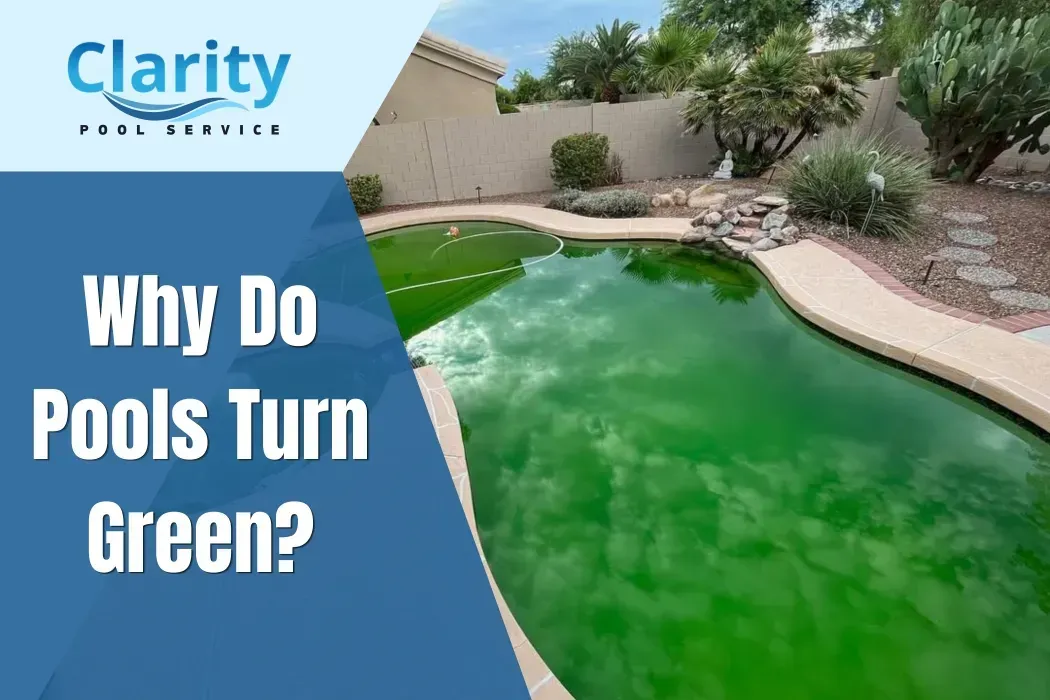
Why Do Pools Turn Green?
A Complete Homeowner's Guide to Preventing, Understanding, and Fixing Green Pool Water in East County San Diego
Nothing frustrates a pool owner more than walking outside and discovering water that was crystal clear just days ago has turned cloudy green.
For many homeowners, the immediate assumption is that algae suddenly appeared overnight.
In reality, green pool water is usually the result of a series of small changes that occurred over several days—or even weeks.
As sanitizer levels decline, water chemistry drifts out of balance, circulation becomes less effective, or debris accumulates, algae is given the opportunity to grow.
By the time the water changes color, the underlying conditions have often existed long before the problem became visible.
The good news is that most green pools are preventable.
Understanding why pools turn green—and recognizing the early warning signs—can help homeowners avoid expensive cleanups while keeping their water healthy throughout the year.
Whether you own a swimming pool in Santee, El Cajon, Lakeside, Rancho San Diego, Fletcher Hills, Mt. Helix, Spring Valley, Lemon Grove, San Carlos, Allied Gardens, Del Cerro, Casa de Oro, or elsewhere in East County San Diego, the causes of green pool water are remarkably similar.
In this guide you'll learn:
Why swimming pools turn green
The most common causes of algae growth
Early warning signs homeowners often miss
How to prevent green pool water
Whether you should fix it yourself or hire a professional
When green pool cleanup becomes necessary
By the end of this guide, you'll understand that preventing algae is almost always easier—and far less expensive—than recovering a neglected pool.
Quick Answer
Most pools turn green because algae begins growing after sanitizer levels become ineffective or water chemistry falls out of balance.
Although algae is the visible problem, it is rarely the root cause.
Green pool water is often the result of one or more contributing factors:
Low chlorine levels
Poor water circulation
Unbalanced water chemistry
Dirty or clogged filters
Heavy debris
Extended hot weather
Delayed maintenance
Professional weekly pool maintenance helps identify these issues early before algae has an opportunity to spread.
Once a pool turns green, recovery usually requires additional chemicals, extended filtration, aggressive brushing, and sometimes multiple service visits.
At a Glance
Key Takeaways
✔ Green water rarely appears overnight.
✔ Algae usually develops after chlorine becomes ineffective or water chemistry drifts out of balance.
✔ Poor circulation and dirty filters often contribute to algae growth.
✔ Preventing algae is almost always less expensive than cleaning up a green pool.
✔ Weekly maintenance helps identify developing problems before water quality deteriorates.
✔ Early action usually means faster, less expensive recovery.
Why Pools Turn Green
Many homeowners think algae simply "shows up."
The reality is much different.
A healthy swimming pool naturally contains microscopic organisms entering the water from wind, rain, swimmers, landscaping, and the surrounding environment.
Proper sanitizer levels prevent these organisms from multiplying.
When sanitizer becomes depleted—or conditions reduce its effectiveness—algae has an opportunity to grow.
Once growth begins, it spreads rapidly.
Several factors often work together to create ideal conditions for algae.
Understanding these factors is the first step toward prevention.
The Five Most Common Causes of Green Pool Water
1. Low Chlorine Levels
Chlorine is your pool's primary defense against algae.
When sanitizer levels fall below the recommended range, algae can begin multiplying rapidly.
2. Poor Water Circulation
Dead spots with limited circulation allow algae to establish itself more easily.
Proper pump operation and routine brushing help improve circulation throughout the pool.
3. Dirty or Clogged Filters
Filters remove contaminants from the water.
As filters become dirty, circulation decreases and water quality suffers.
Routine filter maintenance is an important part of algae prevention.
4. Heavy Organic Debris
Leaves, pollen, grass, insects, and other debris consume sanitizer as they break down.
The more organic material entering the water, the harder chlorine must work.
5. Unbalanced Water Chemistry
Even when chlorine is present, improper pH or stabilizer levels can reduce its effectiveness.
Maintaining balanced water chemistry helps maximize sanitizer performance while protecting pool equipment and surfaces.
Why East County Pools Can Be More Susceptible During Summer
Throughout East County San Diego, long periods of hot weather increase chlorine consumption and accelerate water chemistry changes.
Pools exposed to full afternoon sun often require more frequent monitoring during the summer months.
Additional seasonal challenges include:
Pollen during spring
Dust during dry weather
Leaves during autumn
Increased swimmer use during summer
These conditions don't guarantee algae—but they reinforce why consistent maintenance is important throughout the year.
How Green Pool Water Develops
One of the biggest misconceptions about pool algae is that it appears overnight.
In reality, a pool usually turns green through a series of small changes that occur over several days.
Understanding this process helps explain why consistent weekly maintenance is so effective at preventing algae before it becomes visible.
A typical progression looks like this:
Sanitizer levels begin to decline.
Water chemistry slowly drifts out of balance.
Debris accumulates and increases chlorine demand.
Water circulation becomes less effective.
Algae begins multiplying on pool surfaces.
Water turns cloudy.
The pool eventually develops a green appearance.
By the time the water changes color, algae has already become established.
That's why professional pool service focuses on preventing these conditions rather than waiting until the pool turns green.
Early Warning Signs of a Green Pool
Most pools provide warning signs before algae becomes obvious.
Recognizing these symptoms early often prevents a simple maintenance issue from becoming a major cleanup.
Watch for:
Water beginning to lose its sparkle
Slight cloudiness
Walls feeling slippery
Increased chlorine demand
Green tint near steps or corners
Fine dust returning shortly after vacuuming
Reduced water circulation
Rising filter pressure
None of these symptoms automatically mean your pool has algae.
However, they often indicate that water chemistry or circulation should be evaluated before conditions worsen.
What Causes Algae to Grow?
Although low chlorine is usually the primary trigger, several conditions often work together to create an environment where algae can thrive.
Let's examine each one more closely.
1. Low Sanitizer Levels
This is the most common cause of green pool water.
Chlorine continuously works to destroy bacteria, algae spores, and organic contaminants entering your pool.
As chlorine becomes depleted, algae gains the opportunity to reproduce.
Several factors increase chlorine consumption, including:
High temperatures
Heavy swimmer use
Organic debris
Rain
Intense sunlight
Without regular testing and adjustment, sanitizer levels can decline surprisingly quickly during the summer.
2. Poor Water Circulation
Moving water is healthy water.
Proper circulation distributes sanitizer throughout the pool while carrying debris toward the filtration system.
Poor circulation often occurs because of:
Dirty filters
Full skimmer baskets
Pump problems
Incorrect valve positions
Dead spots with limited water movement
Areas with poor circulation are frequently where algae begins developing first.
Corners, steps, tanning ledges, and behind ladders are common examples.
3. Dirty Filters
Your filter removes contaminants from the water every day.
As debris accumulates inside the filter, circulation gradually decreases.
Reduced circulation allows contaminants to remain in the water longer while making sanitizer less effective.
A dirty filter doesn't directly create algae—but it contributes to conditions that allow algae to grow.
Routine filter maintenance is an important part of preventing green pool water.
4. Heavy Organic Debris
Leaves, grass, pollen, insects, blossoms, and other organic materials all consume chlorine as they decompose.
The more debris entering your pool, the harder your sanitizer must work.
If chlorine becomes overwhelmed, algae often follows.
Pools surrounded by mature landscaping generally require more frequent skimming, brushing, and basket cleaning than pools with minimal vegetation.
5. Unbalanced Water Chemistry
Many homeowners assume chlorine alone prevents algae.
In reality, chlorine works best when the entire water chemistry is properly balanced.
If pH becomes too high, chlorine becomes less effective.
If stabilizer levels become excessive or insufficient, sanitizer performance can also be reduced.
Professional water testing evaluates the complete chemical picture—not just chlorine.
6. Hot Weather and Sunlight
Throughout East County San Diego, extended summer heat places additional stress on swimming pools.
Warm water creates favorable conditions for algae while intense sunlight accelerates chlorine consumption.
During periods of prolonged hot weather, pools often require:
More frequent chemical adjustments
Closer monitoring
Increased chlorine demand
Careful water balance
This doesn't necessarily mean additional weekly service visits are required, but it does reinforce the importance of maintaining a consistent maintenance schedule.
What We Commonly See Throughout East County
Although every pool is different, certain patterns appear repeatedly across East County communities.
During spring, technicians frequently encounter increased pollen and blossoms entering residential pools.
Summer often brings:
Higher chlorine demand
Increased evaporation
More frequent swimming
Greater sunscreen contamination
Following Santa Ana wind events, pools commonly collect:
Dust
Leaves
Small branches
Dirt
Organic debris
These seasonal conditions don't cause algae by themselves.
However, when combined with declining sanitizer levels or poor circulation, they can accelerate algae growth.
Why Green Pool Water Can Become Expensive
Many homeowners assume a green pool simply needs extra chlorine.
Sometimes that's true.
Often, however, algae recovery involves considerably more work.
Depending on the severity of the problem, cleanup may require:
Multiple chemical treatments
Extensive brushing
Continuous filtration
Vacuuming
Filter cleaning
Several service visits
Water retesting
In severe cases, neglected pools may require partial draining or specialized treatment before normal maintenance can resume.
That's why preventing algae is almost always less expensive than correcting it.
Can You Swim in a Green Pool?
This is one of the most common questions pool professionals receive.
The safest answer is:
No—not until the underlying cause has been identified and corrected.
Although algae itself isn't always harmful, green water often indicates that sanitizer levels have become ineffective.
Without proper sanitation, bacteria and other microorganisms may also be present.
Additionally, cloudy green water reduces visibility, making it difficult to see the bottom of the pool—creating an important safety concern.
Before swimming resumes, the water should be properly tested, balanced, sanitized, and clear enough that the bottom of the pool is completely visible.
How to Prevent Your Pool from Turning Green
The best way to fix a green pool is to prevent it from happening in the first place.
Fortunately, algae prevention isn't complicated.
It's the result of consistently performing several small maintenance tasks that work together to keep your water healthy.
Most green pool cleanups can be avoided when homeowners stay ahead of water chemistry, circulation, and routine maintenance.
Here are the most effective ways to prevent algae before it starts.
1. Maintain Proper Water Chemistry
Balanced water chemistry is your pool's first line of defense against algae.
Professional technicians don't simply test chlorine—they evaluate how multiple chemical levels work together to maintain healthy water.
Routine water testing helps ensure:
Sanitizer remains effective
pH stays within the recommended range
Alkalinity supports stable water chemistry
Salt levels remain appropriate for saltwater pools
Water stays balanced throughout changing weather conditions
Small weekly adjustments are much easier than correcting major chemical imbalances after algae develops.
2. Keep Your Pool Clean Every Week
Debris doesn't just make a pool look dirty.
As leaves, insects, pollen, and other organic materials break down, they consume sanitizer and create additional work for your filtration system.
Routine weekly maintenance typically includes:
Surface skimming
Brushing walls and steps
Vacuuming when needed
Emptying skimmer baskets
Cleaning pump baskets
Removing debris before it decomposes helps maintain healthier water while reducing chlorine demand.
3. Keep Water Circulating Properly
Healthy circulation allows sanitizer to reach every area of the pool.
When circulation slows, algae often begins growing in areas where water movement is limited.
Common places include:
Pool corners
Behind ladders
Around steps
Tanning ledges
Areas with poor return flow
Regular equipment inspections, clean baskets, and properly functioning pumps all contribute to healthy circulation.
4. Clean the Filter When Needed
Your filter continuously removes contaminants from the water.
As dirt and debris accumulate, the filter becomes less efficient.
Reduced circulation makes it harder to maintain proper water quality and can contribute to algae growth.
Depending on:
Filter type
Pool usage
Tree coverage
Seasonal debris
Professional filter cleaning may be recommended several times throughout the year.
Monitoring filter pressure helps determine when cleaning is necessary.
5. Maintain a Consistent Weekly Schedule
One of the biggest differences between healthy pools and problem pools is consistency.
Many green pools don't develop because homeowners lack knowledge.
They develop because maintenance becomes inconsistent.
Examples include:
Skipping weekly service
Delaying chemical adjustments
Ignoring dirty baskets
Waiting until the water looks cloudy
Small weekly maintenance tasks performed consistently are far more effective than occasional intensive cleanings.
What Should You Do If Your Pool Turns Green?
Even well-maintained pools can occasionally experience algae after extreme weather, equipment failures, or extended periods without maintenance.
The key is acting quickly.
The longer algae remains in the pool, the more difficult recovery usually becomes.
The first step is identifying the underlying cause rather than simply adding more chlorine.
A proper evaluation should include:
Water testing
Equipment inspection
Filter evaluation
Circulation check
Visual inspection of pool surfaces
Once the cause has been identified, a recovery plan can be developed based on the severity of the algae.
DIY Green Pool Cleanup vs. Professional Cleanup
Some mild algae problems can be corrected by experienced homeowners.
More severe algae outbreaks often require professional treatment.
Professional cleanup focuses on restoring healthy water chemistry while preventing algae from quickly returning.
Common Homeowner Mistakes That Lead to Green Pools
Most algae outbreaks can be traced back to a handful of common maintenance mistakes.
Understanding these mistakes helps homeowners avoid repeating them.
Waiting Until the Pool Looks Green
Algae begins growing before the water changes color.
Waiting until the pool visibly turns green usually means the problem has already progressed significantly.
Routine maintenance catches these changes much earlier.
Assuming Clear Water Means Healthy Water
Crystal-clear water doesn't always mean properly balanced water.
Professional testing evaluates water chemistry—not just appearance.
Many pools remain visually clear even while sanitizer levels have fallen below recommended ranges.
Ignoring Equipment Problems
Reduced circulation creates favorable conditions for algae.
Small pump leaks, clogged filters, dirty baskets, and failing equipment often contribute to algae growth long before homeowners notice obvious symptoms.
Routine inspections help identify these problems early.
Skipping Filter Maintenance
Filters gradually become less efficient as debris accumulates.
Ignoring routine filter cleaning reduces circulation and makes it harder to maintain healthy water.
Clean filters play an important role in algae prevention.
Delaying Professional Help
Some homeowners continue adding chemicals without identifying the underlying problem.
If algae continues returning after repeated treatment, the issue may involve circulation, filtration, water chemistry, or equipment rather than simply insufficient chlorine.
Correctly diagnosing the cause often saves both time and money.
Why Preventing Algae Is Better Than Treating It
Once algae becomes established, recovery often requires:
Additional chemicals
Extensive brushing
Continuous filtration
Vacuuming
Filter cleaning
Multiple days of treatment
Repeated water testing
Preventing algae usually requires far less time, fewer chemicals, and significantly lower costs.
That's why professional weekly maintenance focuses on prevention rather than correction.
Routine testing, balanced water chemistry, equipment inspections, and consistent cleaning help stop algae before it has an opportunity to spread.
Continue Learning
Want to learn more about keeping your pool healthy year-round?
These homeowner guides expand on the topics discussed in this article:
Pool Service Cost in East County San Diego
What Does Weekly Pool Service Include?
How Often Should a Pool Be Professionally Serviced?
How Often Should Pool Filters Be Cleaned?
Saltwater Pool Maintenance Guide
Pool Water Chemistry Explained
Complete Pool Owner Learning Center
Each guide is designed to help homeowners throughout East County San Diego better understand professional pool maintenance while avoiding common ownership mistakes.
Frequently Asked Questions About Green Pool Water
Green pool water is one of the most common problems homeowners experience, especially during the warmer months. Fortunately, it's also one of the most preventable.
Below are answers to the questions pool professionals hear most often.
Why did my pool turn green overnight?
Although it may appear to have happened overnight, most green pools develop over several days.
Typically, sanitizer levels begin declining first. Water chemistry gradually becomes unbalanced, circulation may become less effective, and algae begins multiplying long before the water changes color.
By the time you notice green water, the underlying conditions have usually existed for several days.
Is algae always the reason a pool turns green?
In most cases, yes.
However, algae is usually the result of another problem—not the original cause.
Common underlying causes include:
Low chlorine levels
Poor water circulation
Dirty filters
Heavy organic debris
Unbalanced water chemistry
Delayed maintenance
Identifying the underlying cause helps prevent the problem from returning.
Can I swim in a green pool?
It is generally not recommended.
Green water often indicates that sanitizer levels are no longer effectively controlling algae and other microorganisms.
Cloudy green water also reduces visibility, making it difficult to see the bottom of the pool, which creates an important safety concern.
Before swimming, the water should be properly tested, balanced, sanitized, and clear enough that the bottom of the pool is completely visible.
How long does it take to fix a green pool?
That depends on how severe the algae growth has become.
A mild algae problem may improve within a day or two after proper treatment.
A severely neglected pool may require:
Multiple chemical treatments
Continuous filtration
Extensive brushing
Vacuuming
Filter cleaning
Several days of monitoring
Early treatment almost always shortens recovery time.
Does shocking the pool always solve the problem?
Not necessarily.
Shock treatment is often an important part of algae recovery, but simply adding chlorine without addressing the underlying cause may allow algae to return.
Successful recovery usually includes:
Complete water testing
Proper chemical balancing
Thorough brushing
Continuous filtration
Cleaning the filter
Restoring proper circulation
Treating only the symptom instead of the cause often leads to recurring algae problems.
Can heavy rain turn my pool green?
Heavy rain alone usually doesn't cause algae.
However, storms can:
Dilute sanitizer levels
Introduce organic debris
Wash dirt into the pool
Alter water chemistry
Combined with existing low chlorine or poor circulation, these changes may contribute to algae growth if not addressed promptly.
Does hot weather increase algae growth?
Yes.
Warm temperatures create conditions where algae can reproduce more quickly.
Hot weather also increases chlorine consumption, making regular testing and chemical adjustments especially important during the summer.
Throughout East County San Diego, extended periods of high temperatures often require closer monitoring of water chemistry.
Can a dirty filter cause green water?
A dirty filter doesn't directly create algae.
However, restricted filtration reduces circulation and allows contaminants to remain in the water longer.
Combined with poor sanitizer levels, reduced filtration creates conditions that make algae more likely.
Routine filter cleaning is an important part of algae prevention.
Why does my pool keep turning green?
If algae repeatedly returns, the underlying problem may not have been fully corrected.
Recurring algae can result from:
Improper water balance
Inadequate sanitizer levels
Poor circulation
Dirty filters
Hidden algae remaining on pool surfaces
Equipment problems
Repeatedly adding chlorine without determining the root cause often leads to recurring outbreaks.
Is green pool cleanup included with weekly pool service?
Usually not.
Routine weekly maintenance is designed to prevent algae.
Green pool cleanup is generally considered a separate corrective service because it often requires:
Additional chemicals
Longer service visits
Extensive brushing
Multiple return visits
Filter cleaning
Always ask your pool company which services are included in your maintenance plan.
What's the best way to prevent a green pool?
The most effective prevention strategy includes:
Consistent weekly maintenance
Proper water chemistry
Routine brushing
Regular skimming
Filter maintenance
Equipment inspections
Prompt removal of debris
Most algae problems begin with small maintenance issues that could have been corrected before the water turned green.
Is preventing algae less expensive than cleaning up a green pool?
Almost always.
Routine weekly maintenance generally requires small chemical adjustments and consistent cleaning.
Once algae becomes established, recovery often requires significantly more labor, chemicals, filtration time, and follow-up visits.
Preventative maintenance is typically the most economical long-term approach.
Final Thoughts
Green pool water rarely happens by accident.
In most cases, it's the result of several small maintenance issues gradually working together until algae finally takes hold.
The encouraging news is that nearly all of those issues are preventable.
Consistent water testing, balanced chemistry, proper circulation, routine cleaning, and regular equipment inspections work together to create an environment where algae struggles to grow.
Whether you maintain your own pool or hire a professional service, consistency is the key.
A few minutes of preventative maintenance each week can save hours of cleanup, unnecessary chemical costs, and expensive repairs later.
The goal isn't simply to react when water turns green.
The goal is to keep it from happening in the first place.
Continue Exploring the Pool Owner Learning Center
Want to learn more about protecting your swimming pool?
Continue with these homeowner guides:
How Often Should a Pool Be Professionally Serviced?
Complete Pool Owner Learning Center
Each guide builds on the previous one, helping East County San Diego homeowners better understand pool ownership, maintenance, equipment care, and long-term water health.
Keep Green Pool Water from Ruining Your Summer
Nothing is more disappointing than walking outside expecting to enjoy your pool and finding cloudy green water instead.
Fortunately, algae isn't inevitable.
With consistent maintenance, proper water chemistry, healthy circulation, and routine equipment inspections, most green pool problems can be prevented before they ever start.
At Clarity Pool Service, we believe informed homeowners make better pool owners. That's why our Learning Center is designed to help you understand not only what to do, but why proper maintenance matters.
If your pool has already turned green—or you'd like help preventing algae before it starts—we're happy to evaluate your pool, explain what caused the problem, and recommend the most effective path back to clean, healthy water.